
REVIEW · YEREVAN CITY TOURS
Museum of Illusions Tour
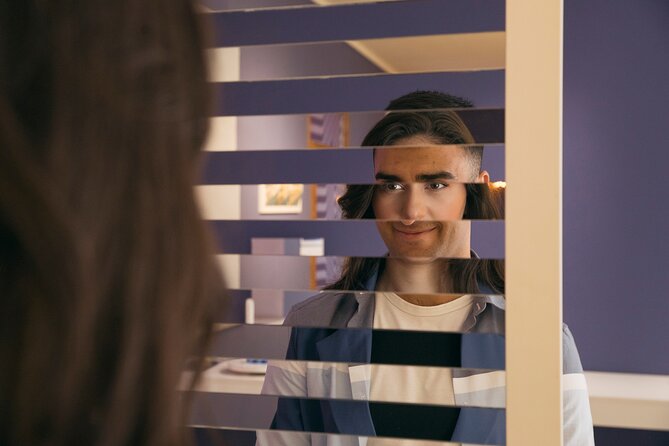
Gyumri gets weird in the best way. This Museum of Illusions tour mixes hands-on optical tricks, quick explanations, and lots of photo moments in a tight 45 minutes to 1.5 hours. It’s the kind of stop that turns your brain into a playful science lab.
I especially like two things here. First, the sheer number of exhibits, over 60 illusions that play with light, shadow, color, size, shape, and motion. Second, the guide-led format, where a local host explains the science behind what you’re seeing in English, and staff like Emily and Anushik are specifically remembered for being clear and upbeat.
One consideration: the experience is short. If you’re hoping for a slow, museum-style wander with long lessons, you may want extra time on your own after the guided portion, since the tour timing is set.
In This Review
- Key highlights you should care about
- Museum of Illusions Gyumri, in plain terms
- Over 60 exhibits: what kinds of illusions you’ll meet
- Your local guide in English: what that adds to the fun
- The 45 minutes to 1.5 hours timing, and how to plan your visit
- Price and value: how $12 works out in real life
- What it feels like to do the tour step by step
- Photo strategy: how to get better shots without slowing everything down
- Who this museum tour is best for
- Getting there in Gyumri and making it fit your day
- Should you book the Museum of Illusions Tour in Gyumri?
- FAQ
- How long does the Museum of Illusions Tour in Gyumri take?
- What language is the tour offered in?
- What is the price of the tour?
- Is admission included?
- Do I need a printed ticket?
- Is the experience suitable for families and most travelers?
- Is there free cancellation?
Key highlights you should care about
- 60+ illusion exhibits focused on how your eyes and brain get fooled
- English-speaking guidance that explains the science behind the tricks
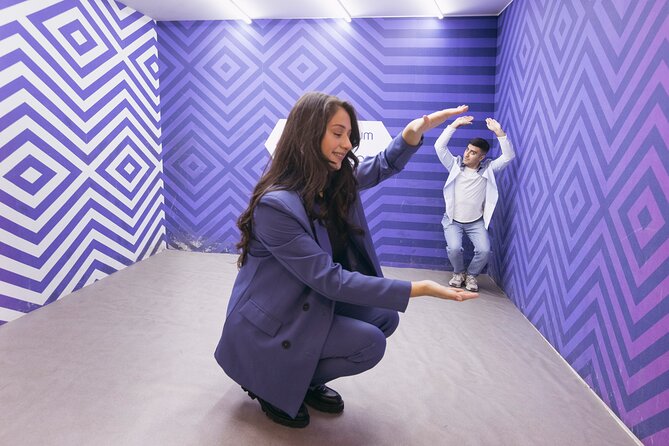
- Photo-ready setups that make it easy to create funny, shareable memories
- Short, flexible tour length (about 45 minutes to 1.5 hours) that fits most itineraries
- Friendly local staff known for patient, helpful explanations
- Good public access with nearby public transportation and a short walk from the main square
Museum of Illusions Gyumri, in plain terms

This is not a quiet museum. It’s a place where you’re encouraged to look closely, move around, and react when your senses disagree with reality. In Gyumri, that’s a fun change of pace. You walk in expecting entertainment, and you leave with a better sense of how perception actually works.
The core idea is simple: illusions are built on predictable tricks. Here, you’ll see concepts like how light and shadow can change what looks “solid,” how colors can shift your interpretation, and how your brain guesses scale, distance, and motion. It’s science you can test with your own eyes, not science you read about and forget.
A big reason people recommend it so often is that it’s active. You do not just watch. You try. You figure out the “why.” You laugh when something doesn’t match what you thought you saw.
Over 60 exhibits: what kinds of illusions you’ll meet
The museum is packed with more than 60 exhibitions, and the themes are wide enough that most ages and interests find something that clicks. The illusions are designed to mess with the same building blocks your vision depends on: light, shadow, color, movement, and geometry.
Here’s what that means for your experience. Instead of one trick you repeat a few times, you’ll get variety. One moment you might be staring at a pattern and realizing it behaves differently than your brain expects. Another moment you might be comparing shapes that look like different sizes until you get the angle right.
Even better, the museum leans into both sides of illusion-joy. You get time to play and try to solve the mystery yourself. Then the guide helps connect what you observed to the science behind it. That combo is what makes it feel educational without turning it into a lecture.
If you’re a photo person, the variety matters too. Different exhibits give you different angles, props, and poses. You’re not stuck in one corner trying to make the same shot work.
Weighing it up? Here is what else runs out of Yerevan on a free day.
Your local guide in English: what that adds to the fun
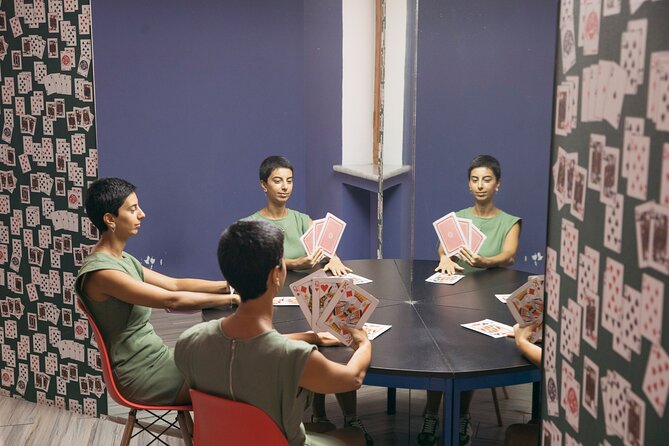
The tour is offered in English, and that’s a practical plus if you want to understand the explanations without translation games. The guide role matters because illusions can be frustrating if you never get the “aha.” With a guide, you’re not just chasing the effect. You’re learning the rule behind it.
Guides such as Emily, Anushik, Ruzanna, Seda, and Samvel are named in visitor feedback, often described as warm, attentive, and full of energy. And there’s a specific detail that sounds small but makes a big difference: guides help with the logic and also help with the photos.
That means you can spend less time figuring out how to stand for the camera and more time enjoying what the exhibit is doing. You’ll also understand why the trick works, so your photos become more than gimmicks. They become proof that your perception has limits.
If you’re traveling as a couple or a group, having a guide keeps the experience moving. If you’re solo, you still get interaction and an easy way to ask questions when something seems impossible.
The 45 minutes to 1.5 hours timing, and how to plan your visit
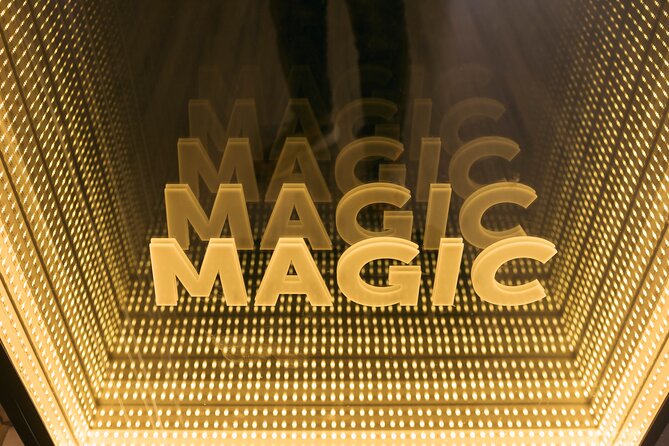
The tour typically runs about 45 minutes to 1 hour 30 minutes. For planning, think of it as a choose-your-own-speed experience inside a structured visit.
Here’s the practical advantage. It fits into a day without eating your whole schedule. You can place it between sightseeing blocks. You can also repeat the experience in a different mood later, because illusion museums reward fresh eyes.
One timing reality: a guide-led walkthrough plus photos takes time. If you rush, you’ll miss the small explanations that connect everything. If you slow down too much, you may feel like you’re sprinting to fit all the exhibits. The sweet spot is to try each illusion once, take a quick photo, and then listen for the science piece that explains what your eyes got wrong.
Also, because the tour is short to medium length, it’s smart for travelers who want an activity with immediate payoff. You’re not waiting for a payoff hours later. The fun starts right away.
Price and value: how $12 works out in real life
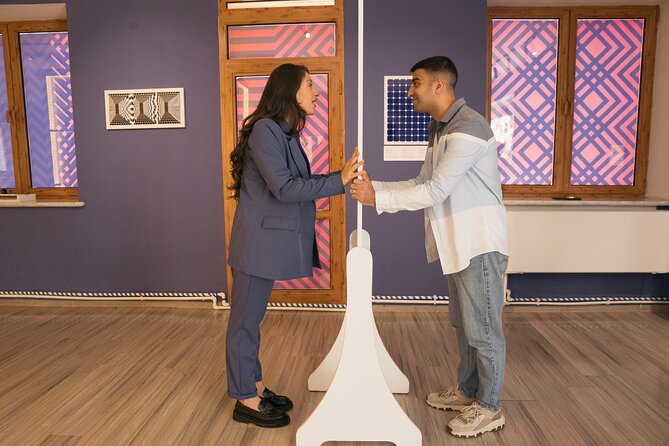
The price is $12 per person, and admission is included. That’s the core value point. You’re paying for access to the museum experience plus a guided explanation in English.
For a lot of attractions, you pay extra for entry and even more for a “meaningful” tour. Here, the experience is built so the guided science is part of the deal. You’re not just buying a ticket to a room of mirrors and moving panels. You’re buying a guided way to understand what’s happening.
Where this becomes especially good value is for groups and families. You’ll get active, shared moments that work even when everyone has different interests. One person loves the photos. Another loves the explanations. The exhibits are designed to satisfy both.
You also get mobility inside the museum. You’re not stuck reading labels all day. That’s part of why it feels like more than an hour-long detour.
What it feels like to do the tour step by step

The itinerary is simple, because there’s really one main stop. You begin at the Museum of Illusions in Gyumri, where your guide leads you through the exhibits.
At the start, you’re essentially being given permission to mess up your expectations. You try things first. You look from different angles. Then you get help connecting the dots. That order helps. If you’re told the trick immediately, the illusion can feel less satisfying. If you’re left alone with no explanation, it can feel like random confusion. This tour keeps a balance.
As you move through rooms, you’ll notice the museum plays with the same themes repeatedly in different ways: your brain guesses based on context, your eyes interpret contrast and color cues, and your sense of size changes based on reference points. The guide’s explanations help you name what’s happening, so it sticks.
You’ll also have frequent opportunities for fun photos. The guide and staff are known for suggesting photo ideas, especially for the kinds of optical setups where perspective is everything. The result is usually a folder full of images where the joke is obvious but the science behind it is still interesting.
By the end, the experience feels like a fast education in perception. It leaves you with a new habit of questioning what you see, even outside the museum.
Photo strategy: how to get better shots without slowing everything down
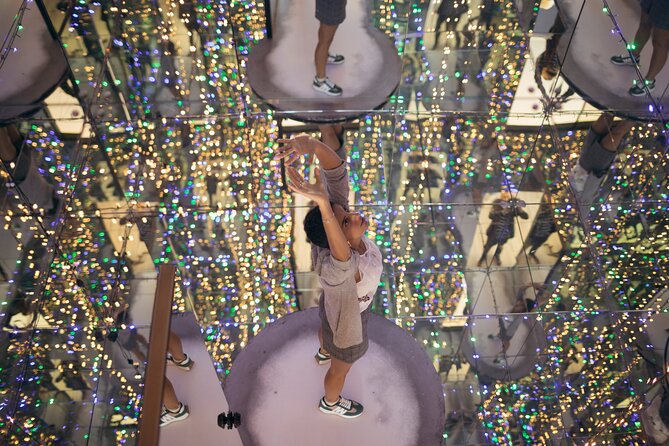
If you care about photos, this place gives you a lot of “instant concept” opportunities. The trick is not to overthink each shot. Take one or two quick photos, then switch back to the experience.
Here are practical ways to make it work in a guided setting:
- Use the guide’s setup tips. Staff have a knack for pointing out where perspective goes wrong in the best way.
- Aim for short, repeatable poses. Don’t treat each exhibit like a photoshoot with long retakes.
- Snap one wide shot plus one close shot. Illusion effects can show up better depending on how much context you include.
- Listen for the science while you look. Even a short explanation helps your eyes “see the mechanism,” which often improves your next photo attempt.
Because the tour is timed, keeping your photo routine tight helps you experience more exhibits and still catch the explanations.
Who this museum tour is best for

This museum works across ages. It’s often described as a nice place for kids, which makes sense because the exhibits are interactive and visual. It’s also a good date idea, because it combines humor with moments of teamwork and shared surprise.
If you’re traveling solo, you’re still not stuck on your own. A local guide keeps things lively and gives you a path through the exhibits, with chances to ask questions.
For couples and groups, the photo moments naturally create common ground. You can swap ideas, laugh at the same illusion, and compare what each person thought they saw.
If you’re someone who hates activities that feel too silly, you might still enjoy it for the science. The guide explanations turn the play into something you can understand.
Getting there in Gyumri and making it fit your day
The museum is near public transportation. It’s also described as a short walk from the main square, which is helpful when you’re planning a day around central sights.
That matters because illusion museums are best when you’re not exhausted. You need energy for looking, moving a bit, and focusing on small details.
If you’re pairing it with other indoor stops, keep this one as a highlight. It’s the kind of place that makes a trip feel lighter, even if the rest of your itinerary is busy.
Should you book the Museum of Illusions Tour in Gyumri?
Book it if you want an easy, high-reward activity that mixes fun photos with real explanations. At $12 with admission included, it’s strong value, especially if you like hands-on experiences or you’re traveling with kids or a group that needs something lively.
Skip it or consider adjusting expectations if you prefer long, quiet museum visits or you want a deep lecture format. This is more about quick, clear science explanations paired with play, and the visit window is limited.
If you’re in Gyumri for a short trip, this is a smart use of time. You’ll get a full dose of perception-bending entertainment without needing to plan your whole day around it.
FAQ
How long does the Museum of Illusions Tour in Gyumri take?
It lasts about 45 minutes to 1 hour 30 minutes (approx.).
What language is the tour offered in?
The tour is offered in English.
What is the price of the tour?
The price is $12.00 per person.
Is admission included?
Yes. Admission ticket is included.
Do I need a printed ticket?
No. The tour uses a mobile ticket.
Is the experience suitable for families and most travelers?
Most travelers can participate, and it’s commonly enjoyed by families, including kids.
Is there free cancellation?
Yes. You can cancel for a full refund up to 24 hours in advance of the experience start time. If you cancel less than 24 hours before, the amount you paid is not refunded.
Everything Else We Have Written Up in Armenia
- Paint Your Own Traditional Doll
★ 5.0 · 4 reviews
Just Reviewed: More From Around Armenia
- Paint Your Own Traditional Doll★ 5.0 · 4 reviews
Yerevan City Tours, compared.
 ★ 4.7Armenia. Akhpat, Dilijan, Sevan, cascad Yerevan from TbilisiFrom $93254 reviews
 ★ 5.0Yerevan Card Including Free 30+ Museums, 5+ Tours & DiscountsFrom $4091 reviews
 ★ 5.0Private sightseeing and walking tour in YerevanFrom $4678 reviews
 ★ 5.0Sightseeing in Yerevan, Erebuni Museum and FortressFrom $2442 reviews
 ★ 5.0Yerevan city tour with drinks in a classic car with photographyFrom $4341 reviews
 ★ 5.0Private Yerevan City Tour: Erebuni, Matenadaran & Tsitsernakaberd MuseumsFrom $6334 reviews
 ★ 5.0Yerevan Private Walking Food TourFrom $22031 reviews
 ★ 5.0Retro KGB Tour: A Volga 21 Adventure in Yerevan’s Soviet Past with photographyFrom $5629 reviews
Browse the lists this tour appears in