
REVIEW · GEORGIA TRIPS & TBILISI TRANSFERS
Armenia – Tbilisi 3 days, 2 nights from Yerevan
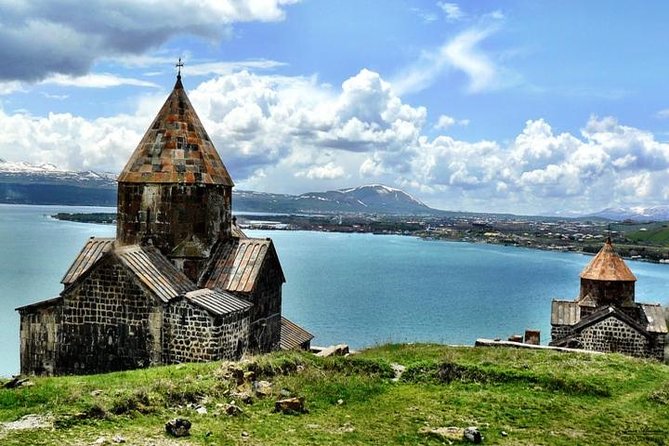
That first monastery view in the morning sets the tone. This private 3-day Armenia and Georgia route is all about medieval churches, big scenery moments by Lake Sevan, and a very manageable plan that still feels full. I especially loved the stop selection, Sevanavank and the UNESCO pair at Haghpat and Sanahin, because they show Armenian monastic life in different styles. The one drawback to consider is the pace, expect long driving days and two overnight hotel nights that are not included.
I also liked how smooth this feels as a private setup. Hotel pickup and drop-off are included, you travel in an air-conditioned vehicle, and the guide provides history along the way. Service seems to matter a lot here, and it showed in the reviews too, including a driver named Zaven who was patient and helpful, plus other drivers (Arthur and Alek) who made the ride feel safe with great communication.
In This Review
- Key things I’d plan around
- Why this Armenia to Georgia route works in just 3 days
- From Lake Sevan to Dilijan Country: Sevanavank, Haghartsin, Goshavank
- Tbilisi overnight: city tour that gives you a proper first impression
- UNESCO Mtskheta stops: Svetitskhoveli Cathedral and Jvari Monastery
- Alaverdi overnight: why the second base matters
- Haghpat and Sanahin UNESCO pair: where the stonemasonry makes sense
- Stepanavan Sochut Dendropark and the Armenian Alphabet Monument
- Price and logistics: where the value comes from
- What to wear, bring, and expect each day
- Who this private tour suits best
- Should you book this tour or keep it simple?
- FAQ
- Do I get hotel pickup and drop-off?
- Is this tour private?
- How many people can join the group?
- How long is the tour?
- What is included in the price?
- Are meals included?
- Do I need tickets for the monuments and attractions?
- Is the tour ticket digital?
- What information do I need to provide when booking?
- Is smart casual the right dress code?
- FAQ
- Is there free cancellation?
- Is passport required on the day of travel?
Key things I’d plan around
- Private group of up to 3: you get a quieter, more flexible trip than crowded buses.
- Free admissions most places: many monastery and sightseeing stops are marked free, so your money goes to food, not tickets.
- Two overnights: one night in Tbilisi and one in Alaverdi, plan your hotels yourself.
- UNESCO hits: you see major Georgian Christian sites in Mtskheta and two UNESCO monasteries in Armenia.
- A nature break with a paid entrance: Stepanavan Sochut Dendropark costs extra, so budget for it.
- Smart casual works: you will be visiting churches, so dress with respect and comfort in mind.
Why this Armenia to Georgia route works in just 3 days
This trip is built for a specific reality. You start in Armenia, you cross into Georgia, and you end back in Armenia, all without trying to cram in too many cities at once. The payoff is that each day has a clear theme: lake monasteries and Dilijan area, then Tbilisi and Mtskheta, then northern Armenia monastic architecture.
What makes it feel efficient is the way the stops “chain” together. You visit well-known monasteries, then move to another religious or historic site that teaches you something different. Even when a stop is short, you usually leave with a sharper idea of how the region thought about faith, learning, and building.
From Lake Sevan to Dilijan Country: Sevanavank, Haghartsin, Goshavank
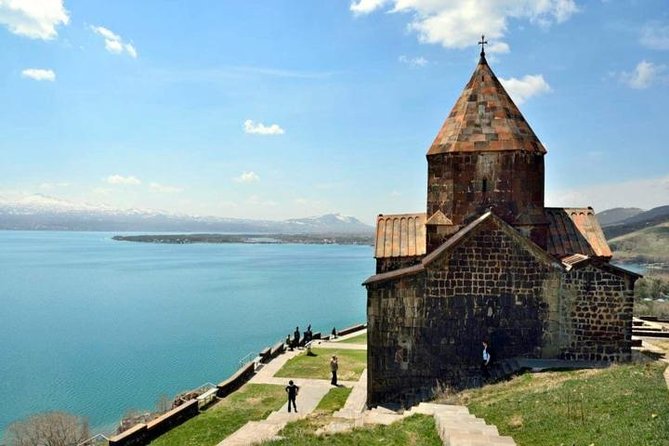
Day 1 begins at Sevanavank Monastery on Lake Sevan, often called the Jewel of Armenia or the Geghama Sea. Founded in 874 AD by Princess Mariam, this monastery uses black tuff in its church buildings, which is likely where the name Sevanavank, the Black Monastery, comes from. It is a great first stop because you get the big “why” of the region immediately: faith and stone, built to last.
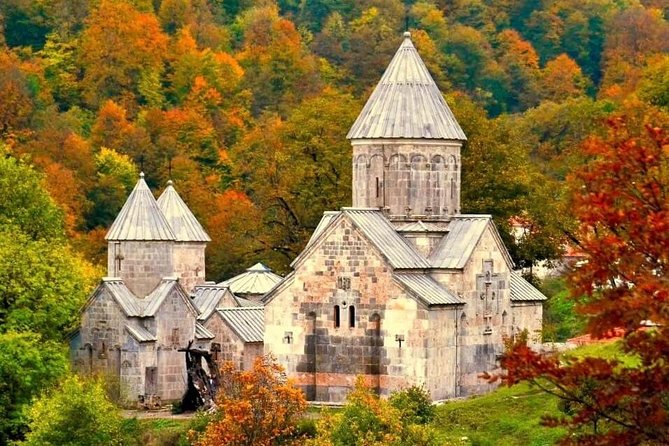
Next you head toward Dilijan country, the area often nicknamed Armenian Switzerland for its feel and altitude. You visit Haghartsin Monastery (also spelled Haghartsin), built between the 10th and 13th centuries with three churches in the complex. The setting is part of the appeal, but the real value is how your guide can connect architecture to daily monastic life, not just show you walls.
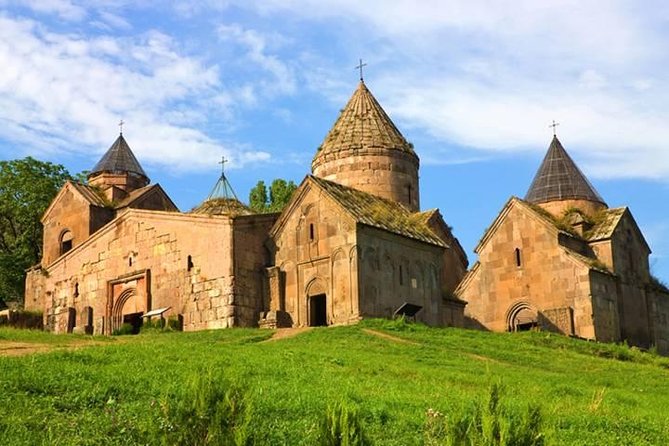
Then comes Goshavank Monastery, another major scholarly center in medieval Armenia during the 12th and 13th centuries. The building phase runs from 1188 into the late 1200s, so you can think of it as a living institution across generations rather than a single moment in time. You will likely notice how these sites feel designed for both prayer and learning, including spaces that supported study and religious function.
After all that, you finish the day with an overnight in Tbilisi. This is a smart choice. It stops you from trying to race back to Yerevan in one day, and it gives you one full day later to absorb Georgia’s capital without stress.
Other runs across the border to Tbilisi
Tbilisi overnight: city tour that gives you a proper first impression
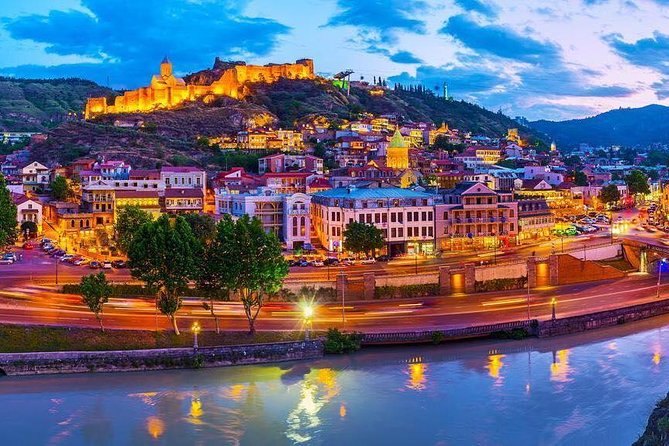
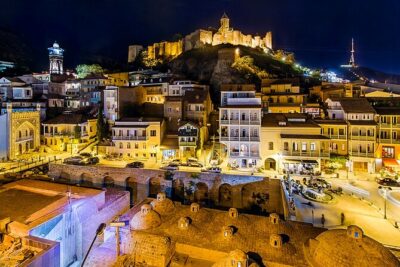
On Day 2, after a morning devoted to Georgian Christian heritage in Mtskheta (more on that below), you return to Tbilisi for an observing city tour. The schedule gives you about three hours, which is enough time to get your bearings and see the main sights without turning it into a full-day sprint.
This is also where the private format pays off. You can move at the speed of your group, not the speed of a coach. If you want to pause for photos or just absorb a street view, the vehicle and guide rhythm make that possible.
And because it is an overnight trip structure, you get a true reset. One night in Tbilisi means you can wander in the evening, sleep, and then come back to your monuments in the morning with less fatigue. It is not glamorous, but it is practical, and practical is what makes a short trip actually enjoyable.
UNESCO Mtskheta stops: Svetitskhoveli Cathedral and Jvari Monastery
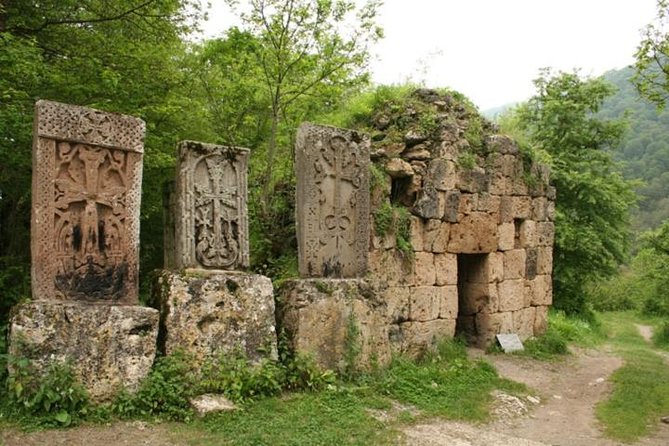
Before you explore Tbilisi, you visit Mtskheta, founded in the 5th century BC. The old city sits at the confluence of the Mtkvari and Aragvi rivers, and that geography matters, because rivers shaped settlement, trade routes, and the spread of religious power.
Mtskheta is home to two heavy hitters: Svetitskhoveli Cathedral (11th century) and Jvari Monastery (6th century). These are among the most significant examples of Georgian Christian architecture, and they are also part of a UNESCO World Heritage listing along with the wider sites in the area.
Here is why I like these stops in a short itinerary. They let you compare sacred architecture across centuries without feeling like you are bouncing randomly between landmarks. Svetitskhoveli gives you scale and complexity, while Jvari brings you a different kind of sacred presence, tied strongly to the idea of religious foundations.
You get about two hours for Mtskheta overall, so it stays focused. You are not stuck in “see everything” mode. Instead, you’re given enough time to take in the main monuments and absorb the story the guide is telling.
Alaverdi overnight: why the second base matters
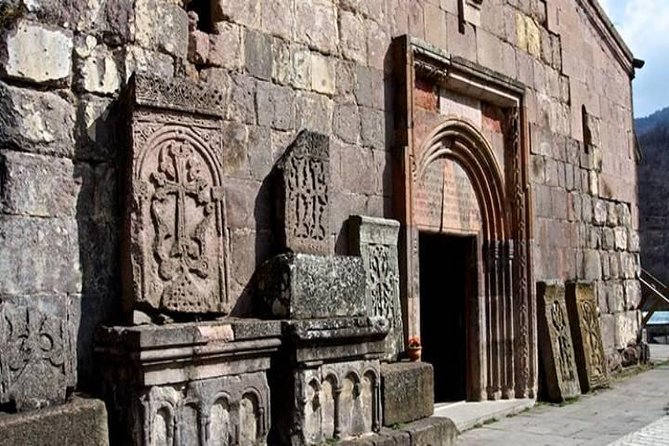
After the Mtskheta and Tbilisi combination, the plan shifts back to Armenia with an overnight in Alaverdi. This is not a random hotel stop. It positions you for the last day’s monastery concentration in the north of Armenia.
You get about twelve hours overnight here as well, which helps the itinerary work. Instead of trying to see multiple distant monasteries from one base, you sleep closer to the final cluster: Haghpat, Sanahin, and then a quick nature and culture finish with the dendropark and the Armenian Alphabet Monument.
If you dislike early starts, this structure can actually help. You are not forced to drive long distances at night, and you have a clear day-to-day rhythm. If you love architecture and religious history, Alaverdi also keeps the energy high because the next day is all monuments and details.
Haghpat and Sanahin UNESCO pair: where the stonemasonry makes sense
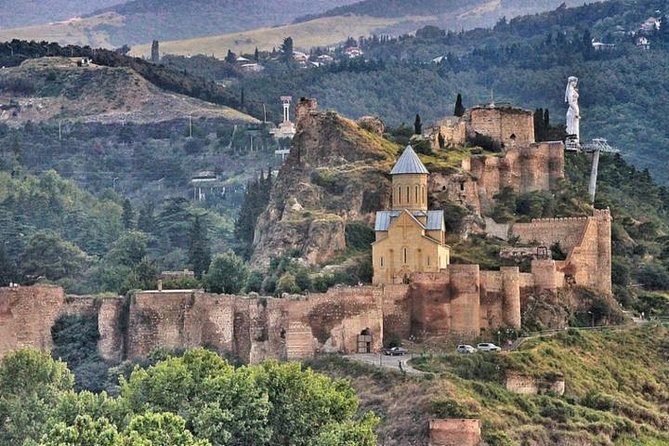
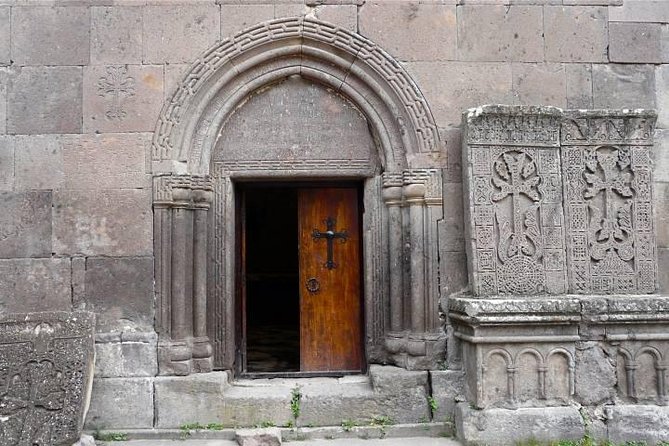
Day 3 is where the trip turns into pure Armenian monastic architecture. First up is Haghpat Monastery, founded by Queen Khosrovanush, wife of King Ashot III, in AD 976. The complex includes multiple structures beyond the main worship area, such as a refectory, a scriptorium, corridor-sepulchers, and a belfry, along with chapels and cross-stones, known as khachkars.
Why that list matters for your experience: it changes how you look. You can see Haghpat not just as a church, but as a functioning religious and academic place. When the guide points out the scriptorium and other spaces, the site stops being scenery and starts behaving like a story you can walk through.
Then you visit Sanahin Monastery, also on the UNESCO World Heritage List. Sanahin used to be an administrative center and family burial place for the Kyurikyan Bagratids in the 10th and 11th centuries, and it also served as an Episcopal residence until the 11th century. That mix of governance, burial, and religious administration is a big deal because it explains why the site looks so thoughtfully built.
Both Haghpat and Sanahin are about an hour each on the schedule. That is a good match for a short trip. You leave with a “before and after” feeling, like you came in thinking monasteries are basically churches, and you walked out seeing how they organized community, education, and authority.
Three days to cover more ground
Stepanavan Sochut Dendropark and the Armenian Alphabet Monument
After the monastery-heavy morning, you get two lighter but meaningful stops.
The first is Stepanavan Sochut Dendropark, a botanical garden established in 1933 by Polish engineer-forester Edmon Leonovich. With more than 500 plants, it functions like a decompress moment. You still get to move, breathe, and reset your eyes after looking at stonework for hours.
One practical note: the dendropark admission is not included. It lasts about an hour, so you are not signing up for a long extra expense. Still, it is worth budgeting so you do not get surprised.
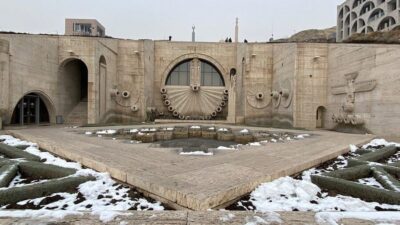
Finally, you visit the Armenian Alphabet Monument. Armenia created its alphabet by Mesrop Mashtots in 405 to make the Bible accessible and support the spread of Christianity. This stop ties the trip together, because it connects learning to religious practice, just like the monastic scriptoriums do earlier in the day.
It is only about thirty minutes, but it gives your day a clear cultural conclusion. You finish with the big idea that writing and faith were linked here, not separate topics.
Price and logistics: where the value comes from
The price is $827 per group, up to three people, for about three days and two nights. That sounds like a lot until you compare it to what you are actually paying for: private transport, hotel pickup and drop-off, and an air-conditioned vehicle sized to your group.
What you are not paying for is also important. Food and drinks are not included, and lunch is not included. Hotel accommodation is not included either, and those are two very real costs in Armenia and Georgia. If you budget only for the tour price, you will end up disappointed when it is time to eat and check in.
So how do you judge value? You look at what saves you effort. You are not hunting for intercity transport, coordinating timing across borders, or trying to arrange a string of monuments with the right order. You also get a private guide presence and history commentary during the drives and stops, which is where a lot of the “wow” comes from on sites like Haghpat, Sanahin, and Mtskheta.
Also, service quality matters. The reviews you get attached to this experience mention a driver named Zaven who was kind, helpful, and patient, and another pair, Arthur and Alek, who handled punctual pickup and kept communication strong while sharing casual conversation and music. That kind of comfort matters more than people think when you are spending three days on the road.
What to wear, bring, and expect each day
This trip is described as needing moderate physical fitness. That usually means walking on uneven surfaces around monasteries and spending time standing, but it should stay manageable if you are comfortable with basic sightseeing pace.
The dress code is smart casual, which makes sense since you will be visiting churches and monastery grounds. I suggest light layers, because weather shifts can happen around lakes and in northern Armenia. If you want to bring a hat or scarf, do it. It makes long outdoor moments more comfortable.
For tickets, the experience uses a mobile ticket, which is convenient. Many entries listed on the schedule are free, but Stepanavan Sochut Dendropark is not included, so bring a little extra cash or be ready to pay on arrival where needed.
Who this private tour suits best
This is ideal for you if you want historic religion-heavy sightseeing but you do not want to spend your vacation figuring out logistics. The private setup helps couples, small families, and friends who like conversation but still want a driver and guide handling the route.
It is also great if you like contrasts. Day 1 feels lake and monastery. Day 2 adds Georgian city and UNESCO architecture. Day 3 is northern Armenia monasteries plus a nature break and a cultural finale. You get a full sense of the region without repeating the same kind of stop all day.
If you dislike car time or early mornings, consider whether you are okay with long driving days. This route moves between key areas by design, and the trade-off is time in the vehicle.
Should you book this tour or keep it simple?
Book it if you want a high-impact plan in a short window, with UNESCO-level stops and a private vehicle that reduces stress. This itinerary also works well if you care about context, because the guide-style commentary is built into how the days flow, not just thrown in at one landmark.
Do not book it if you want a slow, flexible vacation with minimal driving. Also think twice if you already planned your hotels and meals tightly, because this tour covers transport and pickup, but you handle your own accommodation and food.
If you match the pace and you budget for meals and hotels, this trip is a strong value for the amount of major religious sites you get to see in just three days. It is not just “places on a map,” it is a guided story across Armenia and Georgia that you can actually follow.
FAQ
Do I get hotel pickup and drop-off?
Yes. Hotel pickup and drop-off are included as part of the experience.
Is this tour private?
Yes. It is a private tour, and only your group participates.
How many people can join the group?
The tour price is listed per group up to 3 participants.
How long is the tour?
The duration is 3 days (about 2 nights).
What is included in the price?
Included: hotel pickup and drop-off and transport in an air-conditioned vehicle based on the number of participants.
Are meals included?
No. Food and drinks are not included, and lunch is also not included.
Do I need tickets for the monuments and attractions?
Many stops show admission ticket free. Stepanavan Sochut Dendropark lists admission ticket not included.
Is the tour ticket digital?
Yes. It offers a mobile ticket.
What information do I need to provide when booking?
You need the passport name, number, expiry, and country for all participants.
Is smart casual the right dress code?
Yes. The dress code is smart casual.
FAQ
Is there free cancellation?
Yes. Free cancellation is offered, with full refund if you cancel at least 24 hours in advance.
Is passport required on the day of travel?
Yes. A current valid passport is required on the day of travel.
Three Days, More Ground
- 3 day private tours in Armenia from Yerevan
★ 5.0 · 19 reviews
Everything Else We Have Written Up in Armenia
- Group Tour: Garni, Symphony of Stones, Geghard, Lavash Baking
★ 5.0 · 1,042 reviews - Group Tour: Lake Sevan (Sevanavank), Dilijan (Goshavank, Haghartsin)
★ 5.0 · 1,036 reviews - Group tour: Khor Virap, Noravank, Areni Winery and Cave
★ 5.0 · 651 reviews - Yerevan: Garni, Geghard, Symphony of Stones & Lavash Baking
★ 5.0 · 589 reviews
Crossing to Georgia
- Transfer from Yerevan to Tbilisi with 2 sightseeing stops
★ 5.0 · 110 reviews - Group Tour: Must see of Georgia in 2 days from Yerevan
★ 5.0 · 74 reviews - Yerevan to Tbilisi Private car transfer 3 Scenic stops
★ 5.0 · 25 reviews - Transfer Tbilisi to Yerevan with 2 sightseeing stops
★ 5.0 · 23 reviews
Just Reviewed: More From Around Armenia
- Limitless Off-Road Private Tours in Armenia★ 5.0 · 3 reviews
- Garni, Geghard, Lake Sevan, Sevanavank Monastery – private tour from Yerevan★ 5.0 · 3 reviews
- Tsitsernakaber-Hripsime-Echmiatsin-Noy brandy factory★ 4.5 · 3 reviews
- Day Trip to Tatev Monastery★ 4.5 · 3 reviews
Georgia Trips & Tbilisi Transfers, compared.
 ★ 4.7Armenia. Akhpat, Dilijan, Sevan, cascad Yerevan from TbilisiFrom $93254 reviews
 ★ 5.0Must see of Georgia in 2 days from YerevanFrom $18674 reviews
 ★ 5.0Join in group tour-transfer from Yerevan to Tbilisi or vice versaFrom $11614 reviews
 ★ 5.0Private transfer from Yerevan to Tbilisi or Vice VersaFrom $21014 reviews
 ★ 5.0Tbilisi transfer to or from YerevanFrom $22012 reviews
 ★ 5.0Tbilisi Yerevan Transfer with English Speaking DriverFrom $4008 reviews
 ★ 5.0Private Transfer & Tour from Tbilisi to Yerevan or Yerevan to TbilisiFrom $5408 reviews
 ★ 5.0Full Day Guided Tour from Yerevan to Tbilisi with Homemade LunchFrom $997 reviews
Browse the lists this tour appears in