
REVIEW · GEORGIA TRIPS & TBILISI TRANSFERS
Group Tour: Must see of Georgia in 2 days from Yerevan
Georgia comes at you fast.
This 2-day tour is a smart way to see Georgia from Yerevan without renting a car, since you’re handled door-to-door by an air-conditioned vehicle and a guide who explains what you’re walking past. I like that it’s structured, so you spend less time figuring out routes and more time getting meaning from places like Jvari and Mtskheta.
You’ll also enjoy the comfort side of the deal, with a 4-star hotel in Tbilisi plus breakfast and lunch included. The main drawback to consider is that the schedule is tight and you’re moving a lot over two days, so you need comfortable shoes and a flexible attitude.
In This Review
- Key points that make this 2-day Georgia trip practical
- Why this two-day Georgia run works from Yerevan
- Price and what you actually get for about $186
- Day 1: Jvari Church, Mtskheta, and Tbilisi Old Town
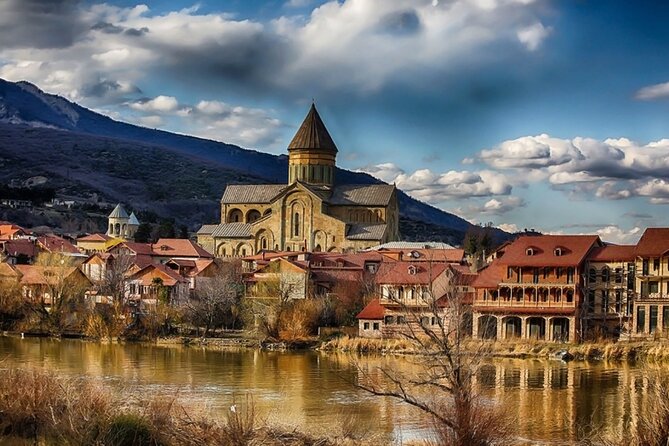
- Jvari Monastery (Holy Cross), a 7th-century viewpoint
- Mtskheta, Georgia’s early Christian capital at two rivers’ meeting point
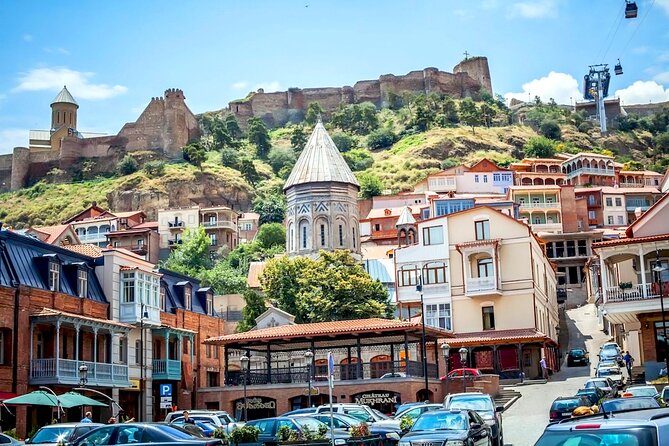
- Tbilisi Old Town, walking time to connect the dots
- Day 2: Rabati Castle and Vardzia’s 13-level cave town
- Rabati Castle in Akhaltsikhe, rebuilt and reimagined
- Vardzia cave town, a 12th-century complex carved 100 meters up
- Hotel, meals, and the comfort factor on a packed schedule
- Guide style, group size, and how to plan your day
- Who should book this tour, and who might want a different plan
- Should you book this Must-see of Georgia in 2 days tour?
Key points that make this 2-day Georgia trip practical
- Air-conditioned transport so the long transfers feel manageable, especially in hot or rainy weather
- UNESCO sites in the first day with Jvari Monastery and Mtskheta’s historic monuments
- Tbilisi Old Town walking time to get your bearings on foot, not just from a bus window
- Rabati Castle plus Vardzia gives you both fortification and cave-town scale in one trip
- Meals are included twice with breakfast plus two lunches, plus bottled water and pastries
- Small-ish group cap (49) keeps the experience social, but still organized enough to stay on time
Why this two-day Georgia run works from Yerevan
Crossing from Yerevan into Georgia is doable on your own, but it quickly turns into a logistics puzzle if you don’t drive. This tour solves that problem in a very direct way: you travel in an air-conditioned vehicle with a guide, and you don’t have to coordinate transfers, tickets, or timing between stops.
The real value here is not only the places you visit, it’s the flow. Day 1 concentrates on the Christian-era story of the region, then Day 2 shifts to fortresses and the dramatic cave complex of Vardzia. If you’ve got limited time, this kind of sequencing helps the big themes click, instead of feeling like disconnected photo stops.
Also, the tour is built for people who want context. You get professional guiding with English plus Russian consecutively, which matters when the sites have layers of meaning and you’d otherwise be skimming translations or relying on your phone.
Price and what you actually get for about $186
At $186 per person, you’re paying for a bundle: transportation, a night in a 4-star hotel, meals, a guide, and site admissions where they’re included.
Here’s how to think about value:
- One night of hotel with breakfast is a big chunk of the cost in any border-crossing trip.
- Lunch is included twice, so you’re not scrambling for food between major viewpoints.
- You get bottled water and pastries, which sounds small until you’re stuck between meals during a walking segment.
- Admissions are handled for you, with at least one major ticketed highlight (Vardzia) explicitly included, and other stops listed as free.
So even if you’re not sure Georgia pricing ahead of time, the structure is clear: you’re not just buying a bus ride and a checklist. You’re buying a guided, timed experience with key comfort elements baked in.
If you’re comparing options, the main question is simple: do you want to manage transportation and ticketing yourself? If the answer is no, this price makes more sense.
Other runs across the border to Tbilisi
Day 1: Jvari Church, Mtskheta, and Tbilisi Old Town
Day 1 moves with purpose. It starts near Mtskheta and then brings you into Tbilisi’s historic lanes on foot. The pacing is designed so you don’t just see buildings, you understand why they were placed where they were.
Jvari Monastery (Holy Cross), a 7th-century viewpoint
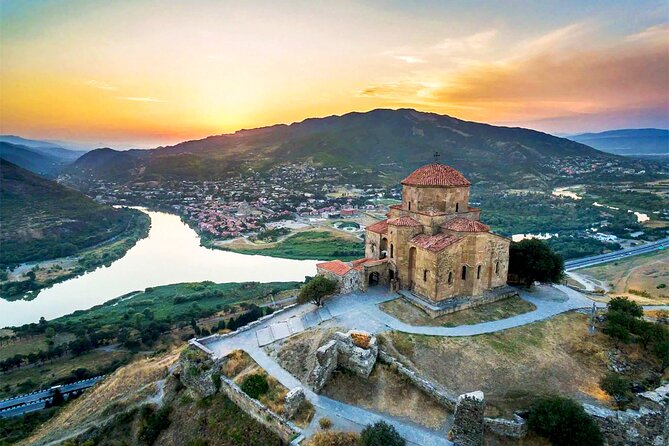
Jvari is one of those places where timing matters. You have about 40 minutes, and that’s usually enough to take in the setting without rushing. The monastery is part of the UNESCO monuments list, built in the first half of the 7th century.
What I’d pay attention to here is the site’s origin story. It’s said to be the same location where Saint Nino erected a cross. Even if you’re not a religious history fan, that detail explains why the place is culturally anchored, not random.
Admission is listed as free, so you’re not losing time to ticket steps.
Mtskheta, Georgia’s early Christian capital at two rivers’ meeting point
Next is Mtskheta, identified as the first capital of Christian Georgia. It’s located where the Kura and Aragvi rivers meet, and that geography helped shape settlement and visibility over centuries.
You’ll get about 1 hour here, and it’s also UNESCO-listed as part of the World Heritage monuments of Mtskheta. The practical benefit of this stop is that it ties the morning location (Jvari’s viewpoint) to the broader city story. When you later see similar religious sites, you’ll recognize the pattern: hills for visibility, towns for community.
Admissions are listed as free.
Tbilisi Old Town, walking time to connect the dots
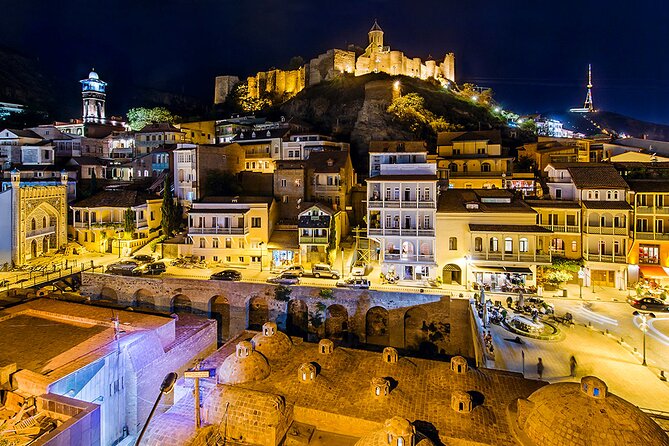
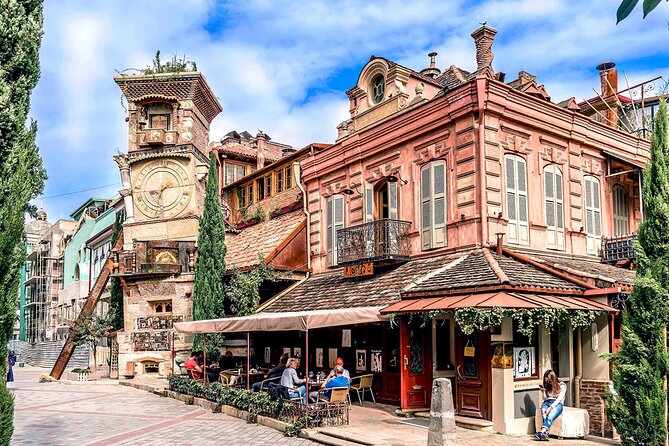
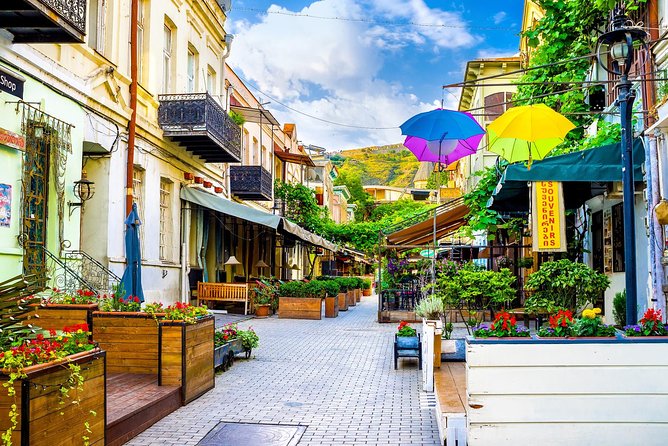
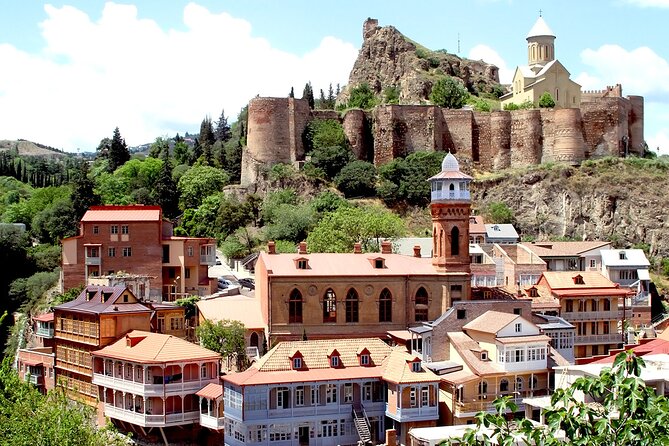
The last stop is Old Town Tbilisi for a walking tour of about 1 hour. This is where the trip turns from “ancient monuments” into “lived city history.”
A walking segment matters because Tbilisi’s vibe is partly in how streets fold and open. On a bus, you can miss that. On foot, you can pick up details faster and you get a chance to ask your guide questions that don’t fit into a 2-minute stop.
Admissions are listed as free, so your value is mainly time and interpretation.
Longer routes if you have the week
Day 2: Rabati Castle and Vardzia’s 13-level cave town
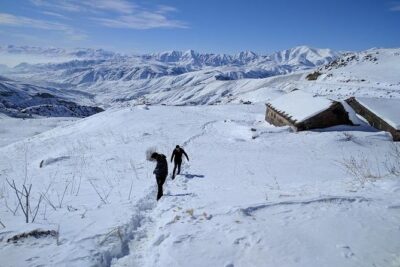
Day 2 is where Georgia gets cinematic. It starts with Rabati, a fortress complex with multiple faiths and layers, then moves to Vardzia, a cave town that still looks impossible.
Rabati Castle in Akhaltsikhe, rebuilt and reimagined
Rabati is listed as a 9th-century castle and is the main landmark of Akhaltsikhe, the capital of Samtskhe-Javakheti in southern Georgia.
You’ll be there for about 1 hour, and the details you get from your guide help a lot. The name translates as “new fortress,” and the site is tied to medieval beginnings with first chronicle mentions in the 12th century. It was built on a high hill, so it’s naturally visible from across the town.
Then there’s the big historical jump: in the 12th to 13th centuries, Rabati expanded and became a residence of the Jaqeli dynasty. Finally, there was major renovation in 2011-2012, which explains why the complex feels both historical and refreshed rather than purely weather-worn.
Admission is free here, so the time you spend is all about understanding the scale and layout, not paying for entry.
Vardzia cave town, a 12th-century complex carved 100 meters up
Vardzia is the headline act. The tour gives you about 1 hour 10 minutes, and that’s a realistic amount to see key spaces without feeling like you’re speed-walking uphill for your entire visit.
Vardzia dates to the 12th century and sits around 1300 m above sea level, about 100 m above the foothills of the Erusheti Mountain. This elevation matters because it affects temperature and breath, especially if you arrive on a cool day expecting sunshine.
What makes Vardzia so striking is the sheer engineering and daily-life design. The complex once had up to 13 floors connected by tunnels. It included living quarters, refectories, barns, wine storage facilities known as marani, and libraries. Even water and drainage were handled with a potable water supply and a sewerage system.
You’re not just looking at a carved wall. You’re looking at a whole functioning world, shaped for defense and survival.
Admission to Vardzia is included, and it’s described as part of the Vardzia Historical Architectural Museum Reserve. That framing helps you approach it like a preserved site, not just ruins.
Hotel, meals, and the comfort factor on a packed schedule
This tour includes 1 night in a 4-star hotel in Tbilisi, with breakfast and two lunches included. That’s a big deal on a two-day format because your energy depends on not having to hunt for meals at the wrong moment.
You also get bottled water and pastries during the day. That’s the kind of small inclusion that prevents the classic problem of “we’re fine” turning into “why are we suddenly starving?”
A note on dinners: dinner is not included. That means you’ll want a plan for the evening after the last major stop. If you’re the type who hates making choices at the end of a long day, consider choosing a simple dinner spot in advance based on your hotel area.
One more practical point: seats are not known in advance. It can be totally fine, but it’s smart to keep your expectations flexible, especially on a busy group departure.
Guide style, group size, and how to plan your day
This experience runs with a professional guide, listed as ENG + RUS consecutively. Consecutive translation is common on international group tours, and it’s usually enough to keep you oriented. Just don’t expect every sentence to be perfectly simultaneous across languages.
The maximum group size is 49, which is big enough to feel like a group, but not so huge that you lose the ability to hear your guide when you’re clustered at stops.
Also, the tour operates in all weather conditions, so dress like the day could change quickly. For these sites, you want shoes that work on uneven ground and stairs, especially around Vardzia. Bring layers. Even if the forecast looks mild, cave complexes and mountain elevation can feel cooler.
Finally, because it’s a border-crossing itinerary, make sure you check what you personally need for entry into Georgia. The tour data flags that some nationalities may need to apply for a visa in advance and possibly get another entry visa to return to Armenia. That’s not a detail to ignore.
Who should book this tour, and who might want a different plan
This is a good match if you want:
- a guided overview of top Georgia highlights in a short time
- comfortable logistics, especially air-conditioned transport and a hotel included
- a mix of places, from UNESCO-linked religious sites to Rabati’s fortress story to Vardzia’s cave-city scale
- enough structure that you’re not spending your trip on timetables and ticket lines
It may be less ideal if you prefer:
- lots of free time in one city, where you can wander without deadlines
- slower pacing, with longer museum time or extra viewpoints
- a trip built around customizing stops, since the order is fixed
The two-day format is the trade. You get breadth and big wow factor, but you won’t linger for hours at every corner.
Should you book this Must-see of Georgia in 2 days tour?
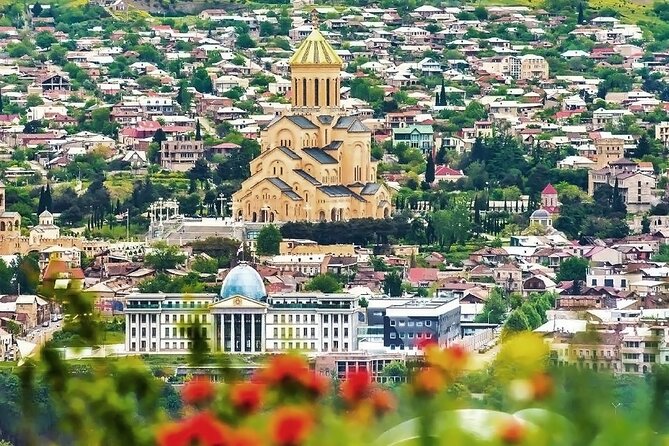
If you’re short on time and you want the essentials with comfort and guidance, I think this one is a strong buy. The standout pieces are the combination of UNESCO-linked Mtskheta and Jvari, the Old Town walking time in Tbilisi, and then the dramatic shift to Rabati Castle and Vardzia. Add in a 4-star hotel plus breakfast and lunches, and the trip feels like a complete package rather than a rough scramble.
I’d book it if you value organization and interpretation over independent wandering. I’d hesitate if you want a slow travel rhythm or you’re likely to feel stressed by a packed schedule.
If your goal is a confident, well-supported taste of Georgia without a rental car, this tour is built for exactly that.
Everything Else We Have Written Up in Armenia
- Group Tour: Garni, Symphony of Stones, Geghard, Lavash Baking
★ 5.0 · 1,042 reviews - Group Tour: Lake Sevan (Sevanavank), Dilijan (Goshavank, Haghartsin)
★ 5.0 · 1,036 reviews - Group tour: Khor Virap, Noravank, Areni Winery and Cave
★ 5.0 · 651 reviews - Yerevan: Garni, Geghard, Symphony of Stones & Lavash Baking
★ 5.0 · 589 reviews
Armenia With a Week to Spare
- The Great Beauty of Armenia: 7-Day Culture and Cuisine Tour
★ 5.0 · 35 reviews - Multi-Day Winter Sightseeing Tour in Armenia
★ 5.0 · 22 reviews - 3 day private tours in Armenia from Yerevan
★ 5.0 · 19 reviews - Gastro tour package in Armenia
★ 5.0 · 17 reviews
Crossing to Georgia
- Transfer from Yerevan to Tbilisi with 2 sightseeing stops
★ 5.0 · 110 reviews - Yerevan to Tbilisi Private car transfer 3 Scenic stops
★ 5.0 · 25 reviews - Transfer Tbilisi to Yerevan with 2 sightseeing stops
★ 5.0 · 23 reviews - Transfer from Yerevan to Tbilisi
★ 3.5 · 18 reviews
Just Reviewed: More From Around Armenia
- Limitless Off-Road Private Tours in Armenia★ 5.0 · 3 reviews
- Garni, Geghard, Lake Sevan, Sevanavank Monastery – private tour from Yerevan★ 5.0 · 3 reviews
- Tsitsernakaber-Hripsime-Echmiatsin-Noy brandy factory★ 4.5 · 3 reviews
- Day Trip to Tatev Monastery★ 4.5 · 3 reviews
Georgia Trips & Tbilisi Transfers, compared.
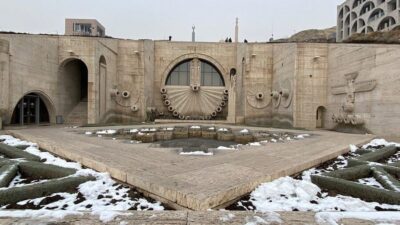 ★ 4.7Armenia. Akhpat, Dilijan, Sevan, cascad Yerevan from TbilisiFrom $93254 reviews
 ★ 5.0Private transfer from Yerevan to Tbilisi or Vice VersaFrom $21014 reviews
 ★ 5.0Join in group tour-transfer from Yerevan to Tbilisi or vice versaFrom $11614 reviews
 ★ 5.0Tbilisi transfer to or from YerevanFrom $22012 reviews
 ★ 5.0Tbilisi Yerevan Transfer with English Speaking DriverFrom $4008 reviews
 ★ 5.0Private Transfer & Tour from Tbilisi to Yerevan or Yerevan to TbilisiFrom $5408 reviews
 ★ 5.0Armenia – Tbilisi 3 days, 2 nights from YerevanFrom $8277 reviews
 ★ 5.0Full Day Guided Tour from Yerevan to Tbilisi with Homemade LunchFrom $997 reviews
Browse the lists this tour appears in