
REVIEW · ARMENIAN FOOD & LAVASH BAKING
The Great Beauty of Armenia: 7-Day Culture and Cuisine Tour
Armenia hits you from every angle. This 7-day tour strings together ancient monuments and real food tastings, with a guide keeping the story clear all week. The only real downside is the days are packed, and weather plus lots of outdoor stops can make the pace feel demanding.
I like that the trip is built as a true private experience, not a cattle-call shuffle. You start at 9:00 am and you can be picked up in Yerevan, with guides such as Gor, Levon, or Varse nik setting a warm tone and sticking close to the plan. If you want a big Armenia sample in one week, this is the kind of itinerary that does it.
In This Review
- Key things I’d circle before you book
- A week built to teach you Armenia, not just park you at sights
- Price and what $750 buys you
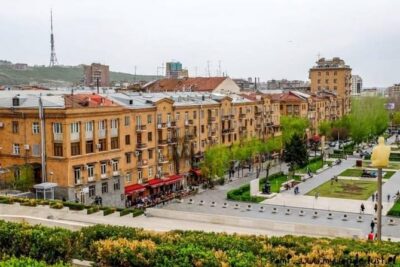
- Yerevan Day 1: art, monuments, and Republic Square at fountain time
- Echmiadzin and UNESCO ruins on Day 2, with a brandy stop that actually tastes like Armenia
- Day 3: Khor Virap, Areni cave history, wine tasting, and Noravank’s red cliffs
- Day 4: the swinging bridge to Wings of Tatev, plus Shaqi waterfall and Zorats Karer
- Day 5: Sevan, Geghard UNESCO, Garni temple, and lavash baking
- Day 6: Amberd Fortress views and the History Museum of Armenia
- Day 7: Vernissage market, Tashir sweets, and smart souvenir shopping
- Who this tour suits best, and who should think twice
- Should you book this 7-day Armenia culture and cuisine tour?
- FAQ
- How long is the tour?
- Where does the tour start?
- Is pickup available?
- Is this a private tour?
- What ticket format do you receive?
- Are admissions included for the main stops?
- What food and tasting experiences are included?
- What are the tour highlights if I like nature views?
- Can I cancel for a full refund?
Key things I’d circle before you book
- Open-air art and major Yerevan landmarks on Day 1, including Republic Square’s singing fountains
- Real manuscript and cathedral stops around Yerevan, Echmiadzin, and UNESCO sites
- Ararat views plus cave and winery history on the way to Areni and Noravank
- Wings of Tatev cable car and monastery time that feels like a highlight, not a checkbox
- Garni and Geghard paired with food moments like lavash baking and multiple taste stops
- A final Vernissage market sweep for practical souvenir shopping without rushing
A week built to teach you Armenia, not just park you at sights
This tour earns its keep by moving beyond photo stops. Each day has a theme: modern Yerevan and national symbols, early Christianity and medieval architecture, then caves, monasteries, and scenic drives, finished by a couple of “eat and shop” moments.
You’ll cover a lot, but it doesn’t feel chaotic on paper because the route groups sights that connect. Yerevan sets the context, Echmiadzin and UNESCO sites ground the spiritual story, then the road trip arms you with history and geography before you start stacking monasteries and viewpoints. The result is that by midweek you’re not just seeing old churches, you’re understanding why Armenia built here, and why people still care.
Also, the tour is set up for a private group. That matters. You get pickup in Yerevan, a mobile ticket, and one vehicle for your party, so you aren’t constantly waiting on other groups.
Price and what $750 buys you
$750 per person sounds like a serious number, but this route mixes included admissions and multiple tasting experiences, plus transport and guided time across many different regions. On a typical “big sights” week, the cost usually balloons from separate tickets, taxis, and guides.
Here, the inclusions listed through the day help justify the total:
- Many major museum and monument entries are included
- Several tastings are built in (brandy, wine, and mineral water)
- You get a guide throughout, plus transfers and time management
- You’re not paying extra to coordinate each stop yourself
If you’re the type who hates wasting vacation time on planning and booking, this is where a packaged itinerary can feel like better value than it looks.
More tables, more lavash out of the tonir
- Group Tour: Garni, Symphony of Stones, Geghard, Lavash Baking
- Yerevan: Garni, Geghard, Symphony of Stones & Lavash Baking
- Group Tour: Tsaghkadzor (Kecharis, Ropeway), Lake Sevan, Trout barbecue treat
- Cultural Walking Tour in Yerevan with Armenian food Tastings
- Group Tour: Khor Virap, Garni temple, Geghard, Lavash baking
Yerevan Day 1: art, monuments, and Republic Square at fountain time
Day 1 is your Yerevan “orientation” day. It’s not just sightseeing, it’s learning how the city represents identity in public space.
Cafesjian Center for the Arts is your first stop, and it’s more interesting than a typical museum visit because it’s set up with an open-air component. You move between galleries and outdoor display areas, so you’re not stuck indoors the whole time. It’s a good warm-up for how Armenia blends modern culture with big-city energy.
Then you hit two monuments that help you read the skyline:
- Victory Park and the Statue of Mother Armenia: you get history plus one of the best big-picture views over central Yerevan
- Statue of David of Sassoun: a sculptural tribute to a hero from the Armenian national epic
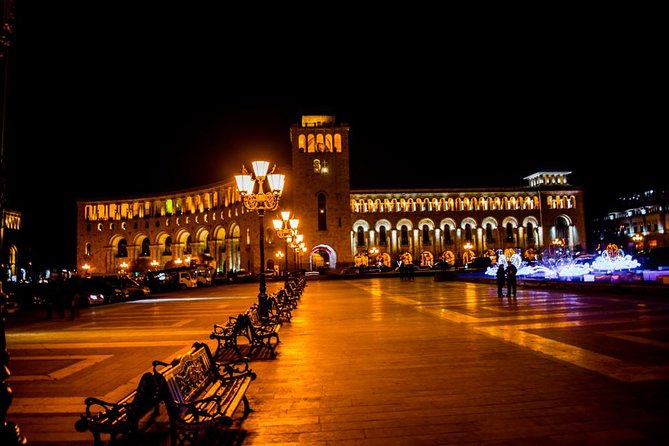
Finally, you end at Republic Square, the heart of Yerevan, where the architecture does the talking. If singing fountains are running when you’re there, this is when the square feels like more than stone. You’ll get your bearings fast, and you’ll also understand why locals treat this area like a living room.
Practical tip: Wear comfortable shoes. Even though each stop is about an hour or less, the day adds up.
Echmiadzin and UNESCO ruins on Day 2, with a brandy stop that actually tastes like Armenia
Day 2 is a clear step into Armenia’s spiritual and ancient core, with multiple sites that connect to early Christianity and medieval architecture.
You start at the Matenadaran, the Museum of Ancient Manuscripts, a research institute and museum with one of the world’s richest collections of medieval manuscripts and books. Even if you don’t read Armenian texts, it’s a powerful reminder that Armenia’s story lives on paper as much as in churches and monuments.
Next comes the Echmiadzin Monastery complex, including the 4th century Echmiadzin Cathedral. This is the spiritual center, and it’s also the location of the Pontifical Residence of the Catholicos of All Armenians. You’re not just visiting a building, you’re visiting a working religious center.
The day keeps building momentum with the Alex and Marie Manoogian Treasury House Museum, where you can see the lance that pierced the side of Christ by the Roman soldier. That kind of artifact gives you a tangible link to how relics shape religious tradition.
After that, it’s onto Zvartnots Temple, a UNESCO World Heritage Site and often considered a masterpiece of early medieval Armenian architecture. This stop is one of the best examples of “read the ruins like a book.” You’re looking at an older form of Armenian architectural ambition, and you’ll start noticing style patterns you’ll see later.
Then, back in Yerevan, you shift from sacred to social with the ARARAT brandy factory. The value here is that you’re not doing a tourist-only sip. You taste a few sorts of Armenian brandy as part of the visit, and it’s a built-in flavor break after the heavy history of the morning and early afternoon.
Consideration: Day 2 is information-dense. If you’re the type who gets museum fatigue, take your time with the Matenadaran and don’t rush through the treasury section.
Day 3: Khor Virap, Areni cave history, wine tasting, and Noravank’s red cliffs
Day 3 is where Armenia’s geography starts stealing scenes.
You begin at Khor Virap Monastery, famous for its views toward biblical Mount Ararat. This is one of those places where the scenery becomes part of the story. You’re in a monastery setting, but you’re also looking at a landmark that sits in countless Armenian narratives.
Next is T’rchuneri (Bird) Cave. The “mystical cave” framing isn’t just for drama. Archaeologists have found important items here, including an old one-piece leather shoe, and also evidence of a 6000-year old winery in the region. You also get a connection to the history of Areni wine culture, including the note that Areni is an actively developing wine region producing the indigenous Areni red grape.
Then you head to an Areni Wine Factory for tasting. This is one of the tour’s best “culture through taste” moments. You learn the background and then you sample the product made from that tradition.
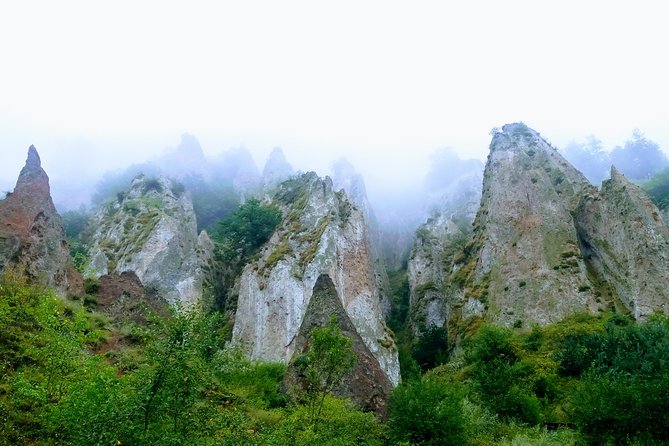
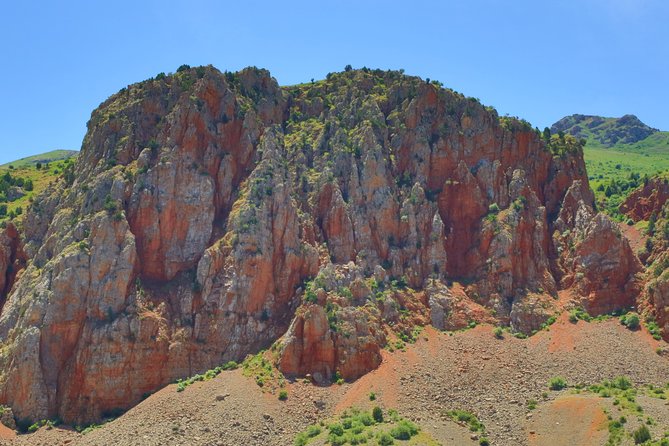
After lunch-style breaks and travel time, the next big visual punch is Noravank Monastery, set in red cliffs. This stop often feels like a landscape in the literal sense, but the value is the architecture and setting together. It’s a great place to slow down a bit and take in how monasteries used to be placed for both protection and visibility.
The day ends with Jermuk Waterfall and the town of Jermuk, known as a retreat center. You also visit the Drink gallery with different sources of mineral water, then you see the waterfall. If you want a “breather day” feeling after monasteries and caves, this ending provides it.
Day 4: the swinging bridge to Wings of Tatev, plus Shaqi waterfall and Zorats Karer
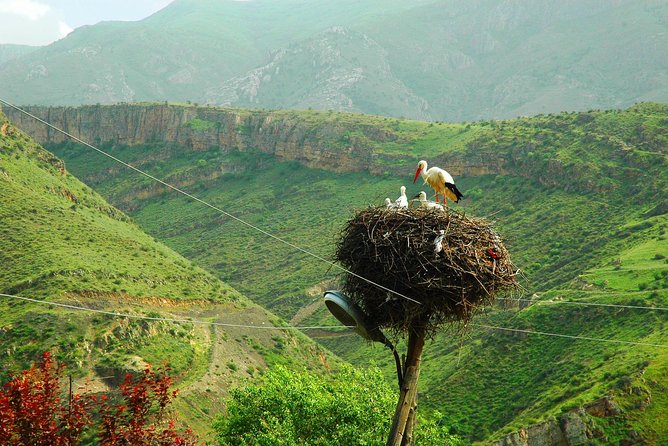
Day 4 looks wild on paper, but it works because the stops are different types of awe.
You start at Old Kndzoresk, an uninhabited cave town you reach via the Khndzoresk swinging bridge. The crossing is part of the experience, and the whole place feels like stepping back into a lost way of living. Even if you don’t love walking, plan for short climbs and uneven ground.
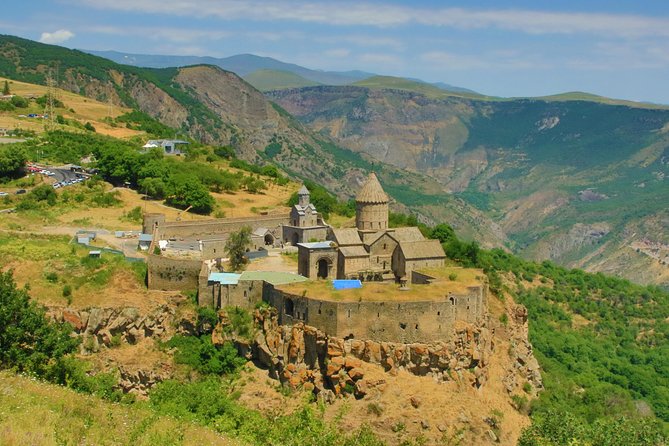
Then you go up toward Tatev Monastery with Wings of Tatev, the cable car described as the longest in the world. This isn’t just transport. It’s a moving viewpoint, and it helps set the stage for arriving at Tatev feeling like an event.
After Tatev, you head to Shaki Waterfall, a visitor-friendly stop at about 18 meters. It’s short, but it adds a softer, natural break after cave town energy and cable-car excitement.
You finish with Zorats Karer, also called Armenian Stonehenge in some descriptions. This is an old metallic installation linked to early astronomy, dating back to the 6th millennium B.C. Even if you don’t get lost in the science, it’s a rare moment where you see ancient Armenia as a society that watched the sky.
Practical tip: This day includes multiple outdoor elements. If you’re traveling in colder months, plan for wind and cold, especially at the bridge and waterfall areas.
Longer routes if you have the week
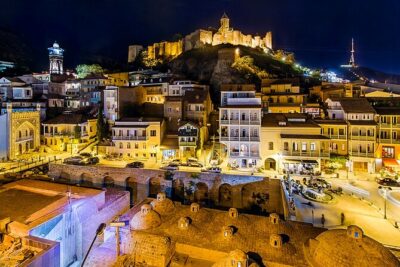
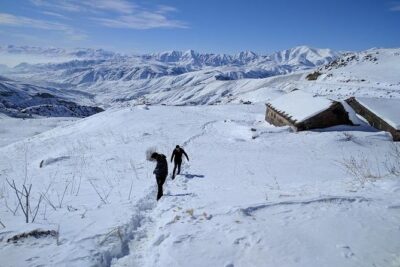
Day 5: Sevan, Geghard UNESCO, Garni temple, and lavash baking
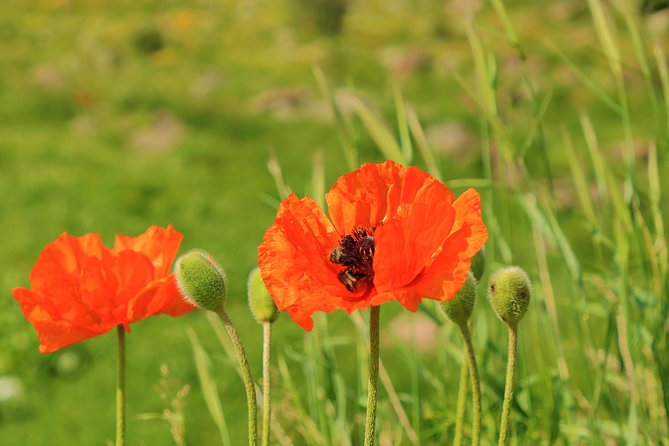
Day 5 balances big UNESCO heritage with food moments that make the day memorable.
You start at Selim Caravanserai, on the Great Silk Road route. Caravanserais were built for travelers, and the building helps you picture long-distance movement across centuries. This is one of those stops that feels quiet, but it’s excellent for connecting geography to trade history.
Then you visit Noratus Cemetery, famous for its khachkars, carved cross-stones. It’s the biggest khachkar cemetery on the territory of modern Armenia. For me, this kind of stop is powerful because it shows how faith, craft, and family memory can all live in one place.
You continue to Sevanavank Monastery on the north-west shore of Lake Sevan, the biggest lake in the Caucasus. You get a monastery plus water views, and that combo makes the day feel less like “only stone and rules.”
Next you get a quick photo stop at Charents’ Arch, with a view of Ararat. It’s short, but it’s a useful way to snap your brain back onto the bigger Armenian picture.
The major architecture highlight is Geghard Monastery, a UNESCO World Heritage Site known for its rocky setting and medieval Armenian design from the 12th and 13th centuries. Geghard is the kind of place where a guided explanation helps. It’s easier to appreciate how the religious building relates to the cliff and caves when you have context.
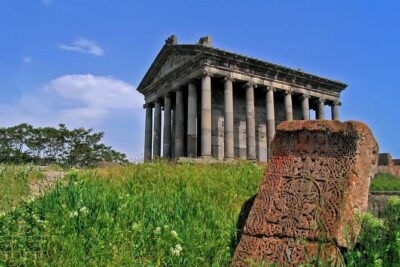
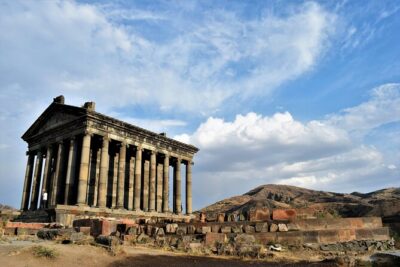
Then you shift to ancient pagan and modern taste at Garni Temple. It’s described as the only restored monument from the pagan period of Hellenism-era influence in Armenia. Afterward, you get Armenian traditional lavash baking at a village house in Garni. This is the cuisine angle you’ll want to remember because it’s hands-on in a way factory tastings can’t be.
If you’re food-focused: this is the day where you’ll feel the most “I learned something real” about Armenian eating and traditions.
Day 6: Amberd Fortress views and the History Museum of Armenia
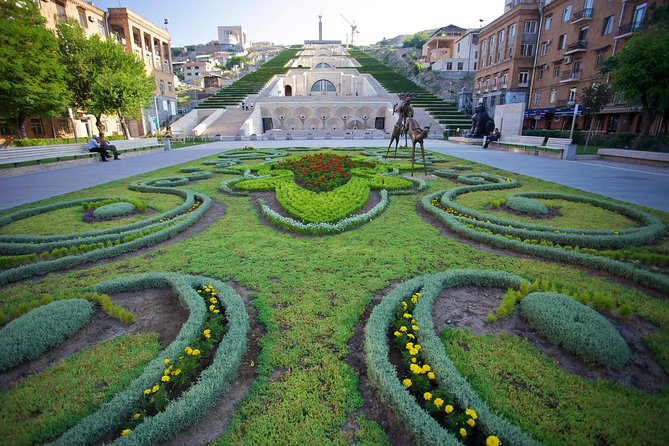
Day 6 is for fortress energy and cultural context.
First you visit Amberd Fortress, a historical defense complex with a 7th century castle and an 11th century church. It’s noted as one of the few preserved fortresses in Armenia. The real payoff is the view over the mountains. It’s a good stop for understanding how defense and landscape worked together.
After that, you move into a structured overview at the History Museum of Armenia, covering the Armenian Highland from the Paleolithic to the present. This is a smart pairing after Amberd. After seeing a specific place tied to survival, you get a timeline that ties places together.
Consideration: If you prefer hands-on ruins over indoor exhibits, balance your attention. The museum stop is worthwhile, but it’s less dramatic than a fortress climb.
Day 7: Vernissage market, Tashir sweets, and smart souvenir shopping
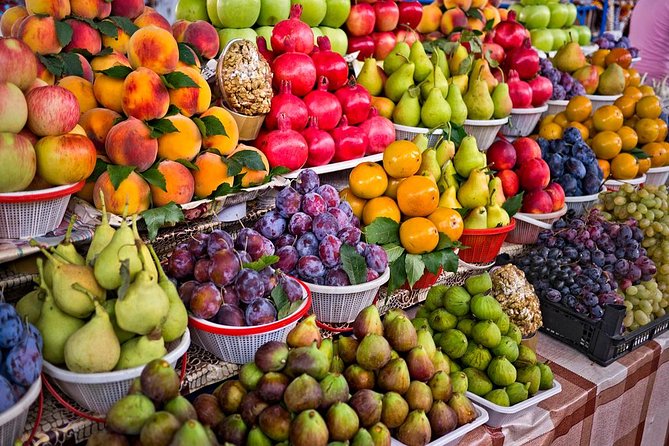
Day 7 is your catch-all day, and it’s a good ending: you get shopping time without turning the whole trip into a mall run.
You visit Vernissage Market for souvenirs and local products that are popular among visitors. You’ll find wines, brandies, dried fruits, sweets, herbs, jewelry, and more. Then you also visit Tashir, described as a market of local sweets and dried fruits.
This is also when you can turn what you learned into what you bring home. If you loved the wine and brandy stops earlier in the week, this is where you can shop with confidence about what you’re buying.
Practical tip: Set aside time to compare prices, and if you’re carrying items back to your hotel, plan for extra bag space.
Who this tour suits best, and who should think twice
This itinerary is a strong match if you want a big cross-section of Armenia in one week: Yerevan culture, Echmiadzin spiritual heritage, UNESCO architecture, cave archaeology, wine region stops, cable-car monastery time, and a final market run.
It’s also a good fit for people who like their travel organized. Several aspects are timed to reduce guesswork, and the private format means fewer slowdowns.
I’d think twice if you hate moving every day or if outdoor walking is hard for you. The schedule is full, and the route includes bridges, caves, waterfalls, and significant sightseeing time across many sites.
Should you book this 7-day Armenia culture and cuisine tour?
If your goal is to understand Armenia quickly and taste your way through it, I think this is a smart booking. The price lines up with the structure: admissions are included for many of the big stops, tastings are built into the day, and you get private guided flow that keeps you from wasting vacation hours on planning.
If you’re traveling in colder months, go in with realistic expectations and dress for wind and cold, especially on the more outdoor-heavy days. But if you’re ready for a packed, story-driven week, you’ll likely feel like you left Armenia knowing its geography, faith, and flavors, not just its monuments.
FAQ
How long is the tour?
The tour runs for about 7 days.
Where does the tour start?
The tour starts in Yerevan, with the meeting time set for 9:00 am.
Is pickup available?
Yes. Pickup is offered in Yerevan. You meet with a sign Barev Armenia and the team will take you to your residence in Yerevan.
Is this a private tour?
Yes. It is a private tour/activity, so only your group participates.
What ticket format do you receive?
You receive a mobile ticket.
Are admissions included for the main stops?
Many stops list admission tickets included, while some stops are free. The itinerary specifies which are included and which are free.
What food and tasting experiences are included?
The itinerary includes brandy tasting at ARARAT Museum, wine tasting at an Areni wine factory, mineral water at the Jermuk Drink gallery, and Armenian lavash baking at a village house in Garni.
What are the tour highlights if I like nature views?
Ararat views at Khor Virap, waterfall stops like Jermuk Waterfall and Shaqi Waterfall, and the cable car ride to Tatev via Wings of Tatev are key nature and scenery highlights.
Can I cancel for a full refund?
Yes. Cancellation is free up to 24 hours in advance of the experience’s start time for a full refund.
Everything Else We Have Written Up in Armenia
- Group Tour: Garni, Symphony of Stones, Geghard, Lavash Baking
★ 5.0 · 1,042 reviews - Group Tour: Lake Sevan (Sevanavank), Dilijan (Goshavank, Haghartsin)
★ 5.0 · 1,036 reviews - Group tour: Khor Virap, Noravank, Areni Winery and Cave
★ 5.0 · 651 reviews - Yerevan: Garni, Geghard, Symphony of Stones & Lavash Baking
★ 5.0 · 589 reviews
Armenia With a Week to Spare
- Group Tour: Must see of Georgia in 2 days from Yerevan
★ 5.0 · 74 reviews - Multi-Day Winter Sightseeing Tour in Armenia
★ 5.0 · 22 reviews - 3 day private tours in Armenia from Yerevan
★ 5.0 · 19 reviews - Gastro tour package in Armenia
★ 5.0 · 17 reviews
Lavash, Tonir and the Armenian Table
- Group Tour: Garni, Symphony of Stones, Geghard, Lavash Baking
★ 5.0 · 1,042 reviews - Yerevan: Garni, Geghard, Symphony of Stones & Lavash Baking
★ 5.0 · 589 reviews - Group Tour: Tsaghkadzor (Kecharis, Ropeway), Lake Sevan, Trout barbecue treat
★ 5.0 · 511 reviews - Cultural Walking Tour in Yerevan with Armenian food Tastings
★ 5.0 · 334 reviews
Just Reviewed: More From Around Armenia
- Limitless Off-Road Private Tours in Armenia★ 5.0 · 3 reviews
- Garni, Geghard, Lake Sevan, Sevanavank Monastery – private tour from Yerevan★ 5.0 · 3 reviews
- Tsitsernakaber-Hripsime-Echmiatsin-Noy brandy factory★ 4.5 · 3 reviews
- Day Trip to Tatev Monastery★ 4.5 · 3 reviews
Armenian Food & Lavash Baking, compared.
 ★ 5.0Garni, Symphony of Stones, Geghard, Lavash BakingFrom $281,042 reviews
 ★ 5.0Khor Virap, Garni temple, Geghard, Lavash bakingFrom $38333 reviews
 ★ 5.0Garni, Geghard & Symphony Small-Group Day Trip with Lavash BakingFrom $26263 reviews
 ★ 5.0Hovhannavank, Saghmosavank, Chocolate House, AghtskFrom $2979 reviews
 ★ 4.5Garni, Geghard, Charent’s Arch, Symphony of Stones & LavashBakingFrom $2048 reviews
 ★ 5.0Yerevan Private Walking Food TourFrom $22031 reviews
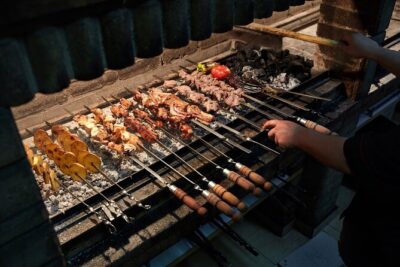 ★ 5.0Gastro tour package in ArmeniaFrom $2,50017 reviews
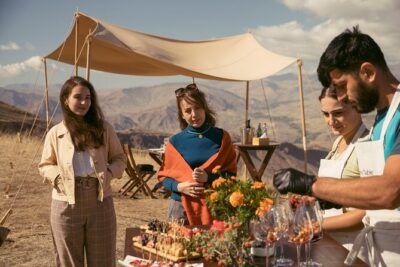 ★ 5.0Winemaker’s Table: Areni CliffsFrom $40011 reviews
Browse the lists this tour appears in