
REVIEW · ARMENIA MULTI-DAY ITINERARIES
7 Day Tour through Armenia
Seven days in Armenia, packed with real meaning. This tour threads Yerevan city time together with monasteries, fortresses, and a couple UNESCO World Heritage stops, so your days feel like a story instead of random photos. I especially like the mix of spiritual sites and culture stops, plus the chance to try different aging Armenian cognacs at the ARARAT Museum.
Two things I’d call out right away: you get lots of meaningful walking, even in the middle of big drives, and the ticket setup is clear, with many admissions marked included and a few sights free. One drawback to consider is the pace, it is a full week of churches and stone, so if you want lots of free time, you might feel scheduled.
In This Review
- Key highlights that matter in the real world
- The real setup: group size, pickup, and how the week feels
- Day 1 in Yerevan: Cascade views, ARARAT cognacs, and Mashtots Avenue
- Day 2: Holy Archangels Church and UNESCO Zvartnots ruins
- Day 3: Lake Sevan monasteries, including Sevanavank and Goshavank
- Day 4: Gyumri’s old square, Marmashen’s Ani-school churches, and Harichavank cliffs
- Day 5: Garni Temple with Ararat views and Geghard’s rock-hewn cave churches
- Day 6: Apricot, red, and white churches, Oshakan’s alphabet legacy, and Amberd at 2,300 meters
- Day 7 in Yerevan: Parajanov art, Erebuni’s Urartian roots, and Vernissage handmade shopping
- What I’d watch for before booking (and who will love it)
- Price and value: what $885.13 buys in a 7-day Armenia plan
- Should you book Ari Tour’s 7-day Armenia tour?
- FAQ
- How long is the Armenia tour?
- What is the starting location for the tour?
- How much does the tour cost?
- Is pickup included?
- What languages is the tour offered in?
- Are tickets included for the sights?
- What attractions and museums are included?
- What is the maximum group size?
- Can I cancel for a full refund?
- What if I need to get to the tour area using public transport?
Key highlights that matter in the real world
- Small group size (max 30) keeps the vibe calmer at busy sites
- English guide support plus pickup makes the first day feel easier
- Multiple ticket-included stops reduces guesswork on entry fees
- UNESCO World Heritage sights at Zvartnots and Geghard give big payoff for history lovers
- Hands-on Armenia variety, from cognac tasting to art museums and Vernissage shopping
- A lot of terrain variety, stairs, cliffs, gorges, and high altitude at Amberd (2,300 meters)
The real setup: group size, pickup, and how the week feels
This is a 7-day Armenia trip based out of Yerevan, with day trips that keep expanding your sense of the country. The tour runs in English, offers pickup, and uses a mobile ticket, which helps you stay organized without hunting for paper confirmations.
The group is capped at 30 people. That size is big enough to meet others, small enough that you can still ask questions when you want answers. Also helpful: it’s described as near public transportation, so even if you are not starting from the hotel via pickup, you should have decent options to get to where you need to be.
The week is built for most people who want to participate, but it is still a sightseeing program, not a lounge vacation. Expect a lot of standing, walking, and transferring between sites, plus some uneven steps at monuments and churches.
Day 1 in Yerevan: Cascade views, ARARAT cognacs, and Mashtots Avenue
Your first day gives you a clean introduction to Armenia’s capital and its big-city energy. It starts at the Cascade Complex, a dramatic long stairway in front of the Opera House. Admission is free, and the payoff is that you can reach high viewpoints over Yerevan.
Cascade is a special kind of walk. It is not just stairs for stairs’ sake. The complex is famous for its elevators inside, which you can use if you want to save your legs while still getting the view. I like that it mixes effort with a realistic payoff: you are rewarded quickly with skyline perspective.
Next is the ARARAT Museum, where the focus is on Armenian brandy culture. The tour includes a tasting of different aging cognacs, and the overall idea is simple: you learn by trying, not by reading a label. This is also a good change of pace after a lot of walking, and it is one of the stops that feels distinctly Armenian rather than generic sightseeing.
Then you end with a central stroll along Mesrop Mashtots Avenue, designed for relaxed city viewing. This part matters because it helps you connect the landmarks you’ll see later to the everyday city around them. You get architecture, street rhythm, and an easy way to orient yourself.
Practical note: wear shoes that can handle stairs. Cascade alone can be a leg workout, and day two through six also includes churches built on edges of gorges and uneven terrain.
Longer routes if you have the week
Day 2: Holy Archangels Church and UNESCO Zvartnots ruins
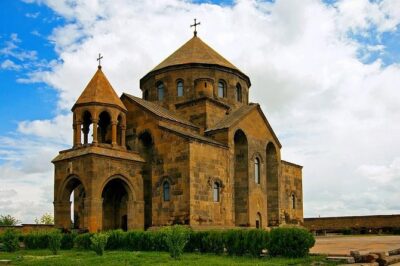
Day two leans into the religious and historical backbone of Armenia. You begin at Holy Archangels Church, described as the main religious and administrative center of the Armenian Apostolic Church. The site’s story stretches back further than the current church, built on the location of a pagan temple linked to Gregory the Illuminator in 303 A.D.
What I like here is the way the stop connects different layers of belief. You are not only looking at architecture. You are seeing how Armenia’s religious identity developed on the same ground over centuries.
After that, you head to Zvartnots Temple, a UNESCO World Heritage site. Construction is dated to 641 to 643, carried out intermittently for about twenty years, initiated by Catholicos Nerses III. The tour also notes that architects from ancient city Dvin were involved, and Dvin is connected to UNESCO as well.
Even if you are not an archaeology nerd, Zvartnots has a strong effect because it is an ancient ruin that still feels monumental. This is the kind of place where a good guide can turn stones into timelines, since you can connect the shape you see with the centuries behind it.
Practical note: if you prefer fewer steps, give yourself a little extra time on arrival. Ruins and church grounds can require steady movement even when the visit is only about an hour.
Day 3: Lake Sevan monasteries, including Sevanavank and Goshavank
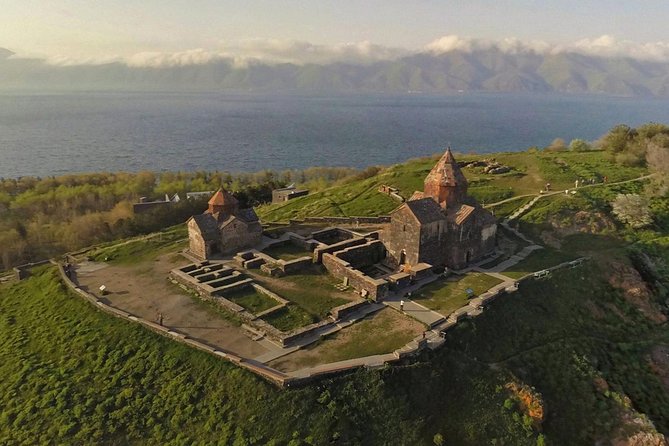
Day three gets you out of Yerevan and into what the tour describes as the pearl of Armenia, Lake Sevan. You visit Sevanavank Monastery, known for its setting and blue, high-altitude lake atmosphere. It’s also positioned as the second high-altitude lake in the world, and the sweet, astonishingly blue water is part of why this stop is memorable.
The monastery itself gives you a spiritual pause after travel time. I like that this day balances nature and culture, so you are not staring at churches all day with no break.
Then you continue with two more monastic sites in the Dilijan area: Haghartsin Monastery and Goshavank Monastery. Haghartsin is described as a religious and educational center in medieval Armenia from the 10th to 13th centuries, surrounded by the nature around Dilijan.
Goshavank is framed as one of the most famous religious and scholarly centers of medieval Armenia, led by Mkhitar Gosh (1130 to 1213), a major scholar, legal expert, and scientist. This matters because you are not only visiting religious buildings. You are getting a sense of how education worked and who shaped it.
Practical note: bring a light layer. Lake and high places can feel cooler even when the rest of the day is sunny.
Day 4: Gyumri’s old square, Marmashen’s Ani-school churches, and Harichavank cliffs
Day four moves from Yerevan to Gyumri, a city with a distinctive old-town feel. You start at Gyumri Main Square, then walk along streets where you can still sense the older crafts life, symbolized by smiths hammering in the city’s imagination.
The tour highlights old houses, including those that survived the devastating 1988 earthquake. It also calls out colorful stone combinations and bas-reliefs. This is one of those days where the architecture is the attraction, not just the history behind it.
Next is Marmashen Monastery, built between 988 and 1029. It sits on the left bank of the Akhurian River and is described as consisting of five churches. The standout claim is that it is one of the best surviving examples of the Ani school of medieval Armenian architecture.
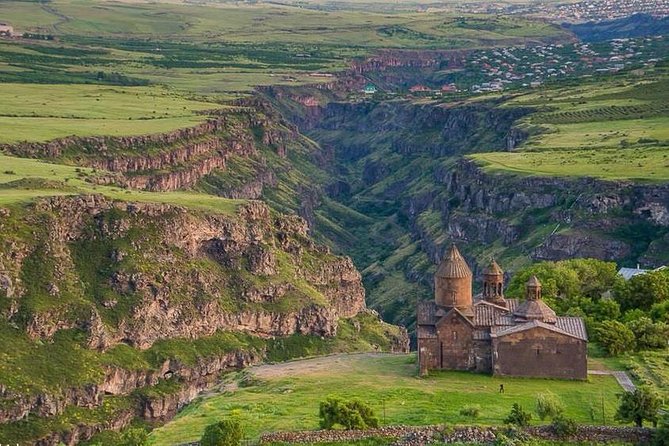
After that comes Harichavank Monastery, perched on a rocky cape on the western slope of Mount Aragats. The tour places its founding in the 7th century, with a main church built in the 13th. In the 19th century the complex became a summer residence of Catholicoses. The most dramatic detail is the small chapel that was separated from the cape by an earthquake, now towering above the canyon.
I like Harichavank because the view is part of the story. You get a sense of why people built in places that are hard to reach, it is defensive, spiritual, and intensely memorable.
Practical note: you may face uneven ground and steep edges. If your feet are sensitive, take it slow and keep your balance first.
Day 5: Garni Temple with Ararat views and Geghard’s rock-hewn cave churches
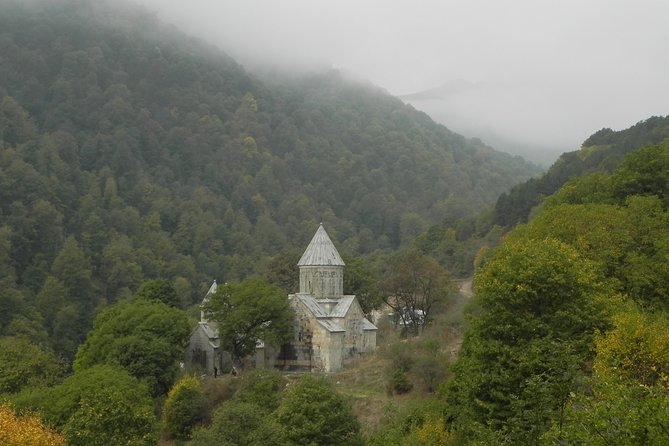
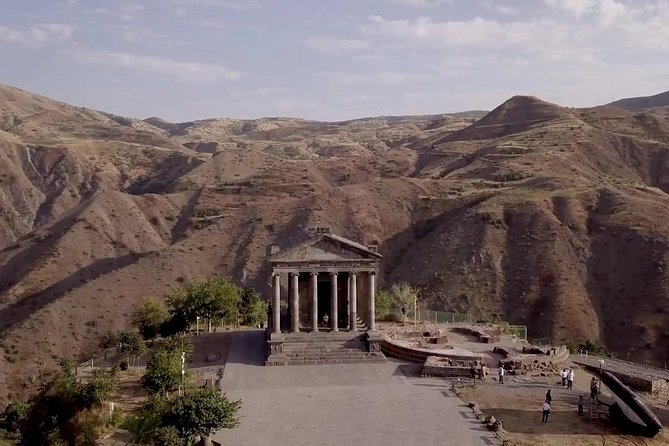
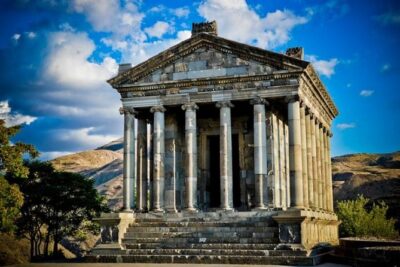
Day five is pure Armenia contrast. You begin at Garni Temple, the tour describes it as the only extant Armenian temple from the pagan and Hellenistic period. It was devoted to Mithra, the sun god, built by Greek slaves in 76 B.C., and it served as a summer residence of Armenian kings for about four centuries.
Before Garni itself, you stop at the Charents Arch, where you get a breathtaking view over the Ararat valley and Mount Ararat. Even if Ararat is not in every photo you’ve seen, this is the point where the country’s geography becomes personal.
Then you move to Geghard Monastery, described as a UNESCO World Heritage site and famous for cave structures in a picturesque valley. It is tied to the biblical lance used in the story of Christ, and the name Geghard means lance in Armenian.
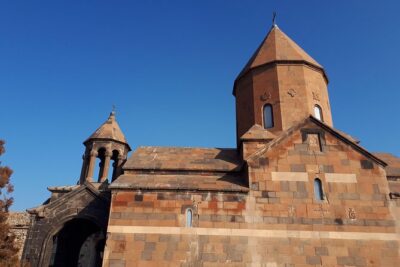
The complex is also presented as a long-running spiritual center that endured assaults for around seven hundred years. The tour mentions khachkars, caves, medieval dwellings, and churches carved right into solid rock, including the Avazan church from 1283.
If you like sites that feel layered and lived-in, this is your big hit of the week. Geghard is not a single building you look at for a photo and move on. The cave shapes and rock-carved details reward slow looking.
Practical note: rock-cut sites can mean stairs and smooth stone surfaces. Go steady, bring water, and plan for the fact you will likely spend your time looking up and around.
A full week of it
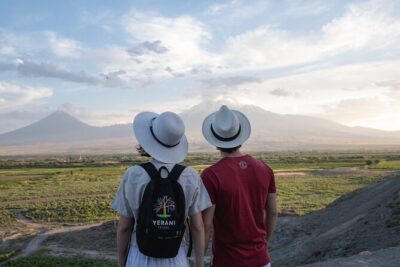
Day 6: Apricot, red, and white churches, Oshakan’s alphabet legacy, and Amberd at 2,300 meters
Day six is gorge-country and high-altitude history. You visit Tsiranavor Church, described as apricot-colored and partly ruined, located at the edge of a gorge. Then you continue to Karmravor Church, the red-colored church from the 7th century, also described as an Armenian Apostolic church. After that, there is Spitakavor Church of Ashtarak, the white-colored partly ruined church from the 13th century.
These three stops might sound similar on paper, but the color and cliff settings change the feeling. I like them because the tour lets you compare how different eras used the same general religious style and adapted it to rugged terrain.
Then you get a break from the church focus with Ashtarak Bridge, built in 1664 with three arches of unequal size. The tour points out that the area underneath and around the bridge is a good picnic spot, which is a practical mental reset in the middle of a packed day.
You also visit Saint Gevorg Church, tied to Saint George, and noted for interior frescoes painted in the 17th century. After that, there is Saghmosavank Monastery, a 13th century church complex known for its acoustics, which ties directly to the name Saghmosavank, meaning spiritual song.
Then the day shifts toward Armenia’s written identity with a trip to Oshakan village. You visit the Church of Saint Mesrop Mashtots, which the tour identifies as the burial place of Saint Mesrop Mashtots, the creator of the Armenian alphabet. If you want a cultural stop that goes beyond stone and dates, this one does a lot with one hour.
Finally, you reach Amberd Fortress, a 10th century fortress 2,300 meters above sea level on the slopes of Mount Aragats. It sits at the confluence of the Arkashen and Amberd rivers, and the tour notes it was used by Armenian kings during wars.
Amberd is the kind of end-of-day stop that makes your whole trip feel bigger. It also has a practical warning built in, altitude. Even if you handle it fine, you might notice you feel winded faster than at sea level.
Day 7 in Yerevan: Parajanov art, Erebuni’s Urartian roots, and Vernissage handmade shopping
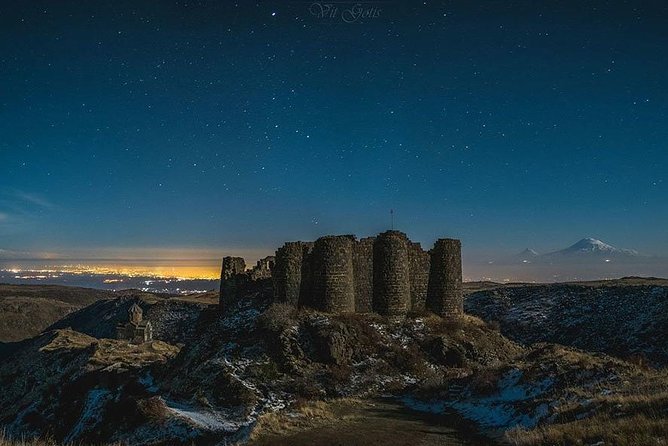
Day seven brings things back to Yerevan with three very different activities, and that mix is smart.
First is the Parajanov Museum, devoted to the filmmaker Parajanov. The description focuses on assemblages, collages, drawings, dolls, and film sketches. I like art museums on the last day because they help you translate what you’ve been seeing all week into something more personal and creative.
Next is Erebuni Museum, centered on the history of Yerevan’s foundation, located at the foot of Arin Berd hill. The Urartian Fortress Erebouni is said to be constructed on top of that hill. This stop gives you an older timeline, so all the medieval monasteries you saw earlier feel like part of a longer arc rather than isolated chapters.
Then you finish with Vernissage Market, an open-air market where locals sell handmade works. Admission here is free. This is a good final stroll because you can turn your last hour into something tangible, gifts or souvenirs that feel connected to actual local making.
Practical note: markets move fast and time can run short at the end of a tour day. If shopping matters to you, keep your energy and cash ready.
What I’d watch for before booking (and who will love it)
If your idea of a great trip is short, focused visits with expert context, you’ll probably enjoy this format. It is strong for people who want Armenia’s major religious sites, a couple big UNESCO moments, and a mix of nature and art without planning every stop yourself.
This tour also fits families better than you might expect. The feedback around it points to guides who keep kids engaged, which is a big deal when you are visiting churches, monasteries, and museums for multiple days in a row.
The main consideration is endurance. The week includes stairs, gorges, cliffside settings, and a high-altitude fortress at 2,300 meters. If you need lots of downtime between stops, or you dislike structured schedules, this may feel like too much.
Price and value: what $885.13 buys in a 7-day Armenia plan
At $885.13 per person for about 7 days, this price can be a solid deal if you care about guided entry experiences and you want to reduce planning stress. The tour lists pickup offered and a mobile ticket, which helps the first day run smoothly.
Just as important, many stops show admission included, while a few are free. That matters because church, museum, and heritage-site fees can add up fast on your own. You also get English-language support, which can turn a pile of ruins into a readable timeline.
One thing you should double-check before you go is what is included versus not included for meals and any overnight logistics, because the data you have here focuses on attractions and admissions. Still, based on the number of ticket-included sights, the core sightseeing value looks strong.
Should you book Ari Tour’s 7-day Armenia tour?
I’d book it if you want a well-paced overview that still includes standout stops like Zvartnots and Geghard, plus a day devoted to art at Parajanov Museum and Erebuni. It is also a good match if you appreciate guided explanations and you like learning while walking.
I’d skip it if you want a slow vacation with long unscheduled hours, or if church and monument visits in a tight week sound exhausting. The itinerary is intentionally packed, and your comfort will depend on your willingness to move every day.
If that sounds like your style, this looks like a smart way to see Armenia beyond the headlines, with enough variety to keep the week feeling fresh.
FAQ
How long is the Armenia tour?
The duration is approximately 7 days.
What is the starting location for the tour?
The tour is based in Yerevan, Armenia.
How much does the tour cost?
The price is $885.13 per person.
Is pickup included?
Pickup is offered.
What languages is the tour offered in?
The tour is offered in English.
Are tickets included for the sights?
Admission is included for many stops, while some stops are listed as free admission.
What attractions and museums are included?
The tour includes stops such as the ARARAT Museum, Parajanov Museum, and Erebuni Museum, plus several churches and monasteries.
What is the maximum group size?
The tour has a maximum of 30 travelers.
Can I cancel for a full refund?
Yes. You can cancel up to 24 hours in advance of the experience start time for a full refund.
What if I need to get to the tour area using public transport?
The tour description says it is near public transportation.
More Armenia Bookings Worth Reading
- Group Tour: Garni, Symphony of Stones, Geghard, Lavash Baking
★ 5.0 · 1,042 reviews - Group Tour: Lake Sevan (Sevanavank), Dilijan (Goshavank, Haghartsin)
★ 5.0 · 1,036 reviews - Group tour: Khor Virap, Noravank, Areni Winery and Cave
★ 5.0 · 651 reviews - Group Tour: Tsaghkadzor (Kecharis, Ropeway), Lake Sevan, Trout barbecue treat
★ 5.0 · 511 reviews
Everything Else We Have Written Up in Armenia
- Group Tour: Garni, Symphony of Stones, Geghard, Lavash Baking
★ 5.0 · 1,042 reviews - Group Tour: Lake Sevan (Sevanavank), Dilijan (Goshavank, Haghartsin)
★ 5.0 · 1,036 reviews - Group tour: Khor Virap, Noravank, Areni Winery and Cave
★ 5.0 · 651 reviews - Yerevan: Garni, Geghard, Symphony of Stones & Lavash Baking
★ 5.0 · 589 reviews
Armenia With a Week to Spare
- Group Tour: Must see of Georgia in 2 days from Yerevan
★ 5.0 · 74 reviews - The Great Beauty of Armenia: 7-Day Culture and Cuisine Tour
★ 5.0 · 35 reviews - Multi-Day Winter Sightseeing Tour in Armenia
★ 5.0 · 22 reviews - 3 day private tours in Armenia from Yerevan
★ 5.0 · 19 reviews
Just Reviewed: More From Around Armenia
- Limitless Off-Road Private Tours in Armenia★ 5.0 · 3 reviews
- Garni, Geghard, Lake Sevan, Sevanavank Monastery – private tour from Yerevan★ 5.0 · 3 reviews
- Tsitsernakaber-Hripsime-Echmiatsin-Noy brandy factory★ 4.5 · 3 reviews
- Day Trip to Tatev Monastery★ 4.5 · 3 reviews
Armenia Multi-Day Itineraries, compared.
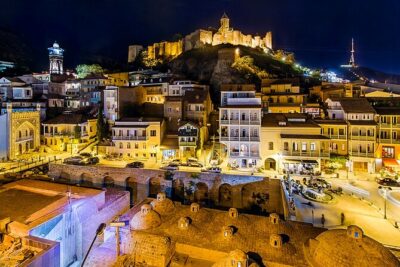 ★ 5.0Must see of Georgia in 2 days from YerevanFrom $18674 reviews
 ★ 5.0The Great Beauty of Armenia: 7-Day Culture and Cuisine TourFrom $75035 reviews
 ★ 5.0Multi-Day Winter Sightseeing Tour in ArmeniaFrom $38022 reviews
 ★ 5.03 day private tours in Armenia from YerevanFrom $55519 reviews
 ★ 5.0Gastro tour package in ArmeniaFrom $2,50017 reviews
 ★ 5.06 days in Armenia: Garni, Tatev, Echmiadzin, Sanahin, HaghpatFrom $85512 reviews
 ★ 5.0Family package for 7 daysFrom $2,07010 reviews
 ★ 5.02 days and 1 night private tour to Khor Virap, Areni, Noravank, Goris, Tatev.From $4009 reviews
Browse the lists this tour appears in