
REVIEW · YEREVAN CITY TOURS
Soviet Yerevan: Small-Group City Experience
Seeing Lenin-era Yerevan in real places is the point of this tour. I like that it is structured in a way that actually teaches you how the city changed, stop by stop, while still leaving room for photos and quick moments to breathe. I also like the payoff at the end, the Children’s Railway with parts from the 1937 era still in place. One thing to consider is that the tour includes rides plus walking through active areas like markets and stations, so it is not the best choice if you want everything to be purely inside.
The guide really helps the whole thing click. If you get Marine, you’ll likely get the same mix people love, personal stories tied to the streets, plus Soviet jokes that make the setting feel human instead of like a textbook.
In This Review
- Key highlights to look for
- What this Soviet Yerevan tour does better than most city tours
- Republic Square and Lenin-era symbolism you can still read
- Sasuntsi Davit Street station, Soviet infrastructure, and a folk-hero name
- Malatia-Sebastia and the market nickname Bangladesh
- Beknazarian Street and the CCCP apartment-story moment
- The Children’s Railway: 1937 still running, and why it matters
- Price and logistics: what $65 actually buys you
- The guide experience: Marine’s storytelling style and the jokes that land
- Practical advice for your Soviet Yerevan afternoon
- Should you book Soviet Yerevan if you like history?
- FAQ
- How long is the Soviet Yerevan small-group experience?
- How much does it cost, and what do I get for that price?
- What group size is this tour limited to?
- Is the tour offered in English?
- Do I need to buy tickets for the attractions on the route?
- Can I cancel for a full refund?
Key highlights to look for
- Republic Square’s name changes, from Lenin Square to today’s Republic Square, with parade timing trivia that makes it real
- Sasuntsi Davit Street station, opened in 1981 and linked by a pedestrian tunnel to the railway area
- Malatia-Sebastia market tasting, where the local nickname Bangladesh comes from everyday life
- Beknazarian Street CCCP apartments, Soviet-era housing stories plus time for Soviet-style ice cream
- Children’s Railway from 1937, including the original main station building and the first locomotive still intact
What this Soviet Yerevan tour does better than most city tours
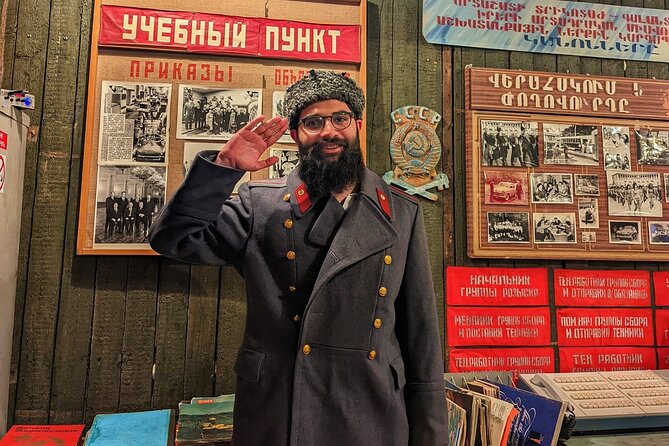
Most “theme” tours give you facts fast and move on. This one goes a different route. You start in the big symbolic center, then follow the Soviet thread outward through metro history, neighborhood life, Soviet housing, and finally a living relic for kids, the Children’s Railway.
That structure matters for you because it helps you connect the dots. Republic Square is where power announces itself. A metro station is where daily movement gets shaped by design. A market is where people eat, bargain, and keep routines going. And Soviet apartment streets show what policy looks like in real life, right down to how buildings were planned for the proletariat.
It is also a good value format for the price. For $65, you are not paying just for a walk. You get a local expert guide, a metro ride plus a Soviet-style van ride, and snacks included. The tour also stays focused, with a maximum group size of 6, which is big for Yerevan because it keeps the pacing from turning into a herd shuffle.
If you like history but you do not want museum fatigue, this is a sweet spot. It is half story, half street-level wandering, and it gives you little “why does that exist here” moments all afternoon.
Republic Square and Lenin-era symbolism you can still read
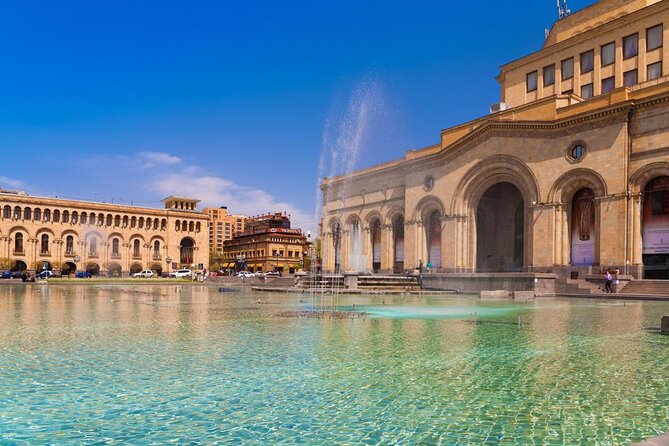
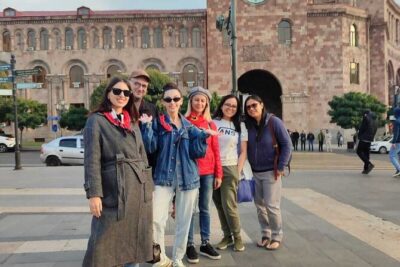
Your tour begins in Republic Square, at Government House #2 in the Ministry of Foreign Affairs area. It is one of those places where the architecture and the naming matter more than you’d expect.
During the Soviet period, it was called Lenin Square. A Vladimir Lenin statue stood here, and Soviet parades and celebrations rolled through the square two times a year, after being planned originally as three. In 1988, the pattern shifted, and then after Armenia became independent, the Lenin statue came down and the square got its current name.
For you, this is useful because it teaches a practical skill: looking at the same location and asking what changed, who removed the statue, and when the public calendar stopped repeating Soviet rituals. You are not just photographing a landmark. You are learning how political identity gets stamped onto public space, then replaced.
A small watch-out: Republic Square is popular, busy, and bright. That is great for photos, but it can be noisy. If you’re sensitive to crowds, plan to arrive with a calm mindset and enjoy the shift from “monument energy” to the quieter areas later on.
More ways to walk the capital
- Cultural Walking Tour in Yerevan with Armenian food Tastings
- Yerevan Card Including Free 30+ Museums, 5+ Tours & Discounts
- Private sightseeing and walking tour in Yerevan
- Yerevan city tour with drinks in a classic car with photography
- Private Yerevan City Tour: Erebuni, Matenadaran & Tsitsernakaberd Museums
Sasuntsi Davit Street station, Soviet infrastructure, and a folk-hero name
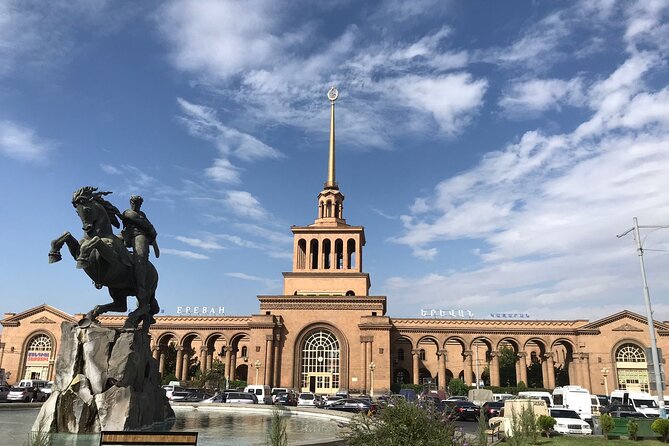
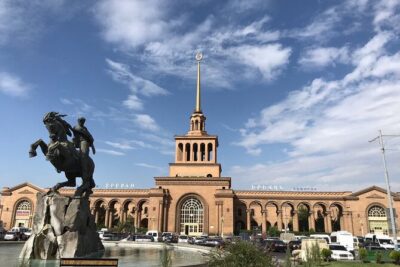
Next you head to Sasuntsi Davit Street, centered on one of Yerevan’s original metro stations. This is not a generic metro stop. It opened to the public on 7 March 1981, and it is connected to the adjacent Yerevan railway station through a pedestrian tunnel.
Here is the detail that makes it stick: the station name ties to David of Sassoun, a legendary figure in Armenian folklore. A statue of David of Sassoun stands outside the railway station, so the station and the platform area feel like they share the same cultural label.
For you, the “why this matters” is simple. Soviet systems loved order, circulation, and naming. A metro station named after a folk hero turns transit into something with identity, not just function. And the tunnel connection shows how movement was planned as a network, rail to metro to whatever came next.
Practical note: you’ll want to keep your phone ready for quick shots, but the best photos here come from slowing down. Look up at the station features, then glance for the connection back toward the railway zone.
Also, because this is a free admission stop, you can treat it as a learning moment rather than a “ticket line” moment, which keeps the afternoon flowing.
Malatia-Sebastia and the market nickname Bangladesh
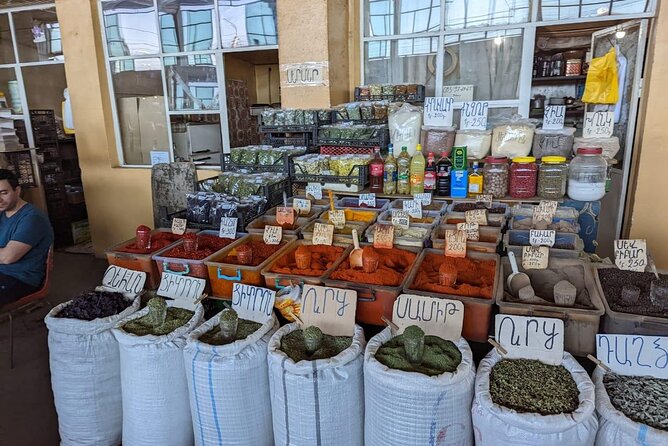
After the station, the tour shifts into daily life in Malatia-Sebastia. This part centers on a market area locals call Bangladesh. The name comes from the idea of agricultural commerce, the practical trade energy of the place, and the way produce dominates what people come for.
You get about an hour here, and you do not just look. You sample local snacks, including Perashki and Ponchik. It’s a straightforward way to understand the setting. Food tells you what people treat as comfort, what fills a routine, and what still feels normal even when the surrounding city tells a bigger story.
This stop is valuable because it balances the political and architectural pieces earlier. Soviet Yerevan was not only parades and buildings. It was also shops, food, and the work of getting through the day. Markets like this are where you can sense continuity, especially in places where city life keeps moving even as regimes change.
A consideration: market areas can be crowded and active, and smells and sounds are part of the experience. If you love food and you don’t mind motion, you’ll have fun. If you prefer quiet sightseeing, treat this as a sensory break, not a slow photo walk.
Beknazarian Street and the CCCP apartment-story moment
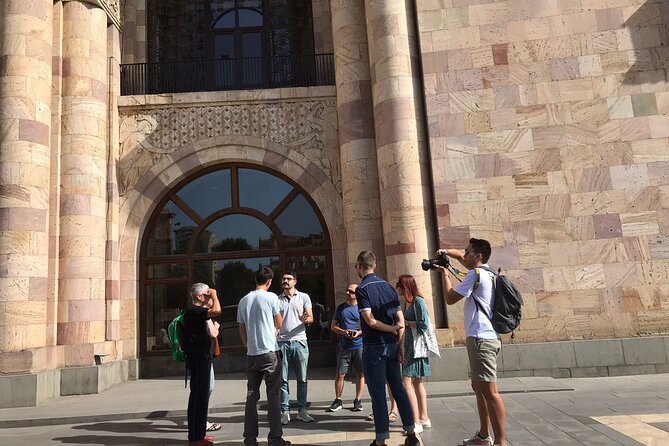
Then you head to Beknazarian Street, which is where the tour leans into Soviet neighborhood design. This area is associated with the CCCP district idea, with apartment blocks that were built to house the proletariat.
What you’re listening for here is the human detail. These buildings are not just “Soviet architecture.” They represent a housing plan and a promise, and the stories tied to the last buildings built in Soviet times add a sense of timing and transition. You get that feeling of a system nearing its end, while the walls still go up.
You also get a treat, Soviet ice cream. It is included as part of the experience, so you can taste one more piece of everyday Soviet life instead of only reading about it.
This stop works well for you if you like architecture but also like context. A building tells a story about power, but a street tells a story about daily use. Even if you only spend about 30 minutes here, the tour pushes you to connect scale, purpose, and era.
One practical tip: keep your time for photos tight. Apartment streets give you angles, but the best shots come when you reposition once, not when you stand still for long.
The Children’s Railway: 1937 still running, and why it matters
The final stop is the Children’s Railway. It runs between the Hrazdan river and the Hrazdan water canal. In the USSR, there were several children’s railways, and after the breakup, some kept functioning. Here, you’re looking at a site built in 1937.
What you’re really getting is a rare kind of historical continuity. The original main station building is still intact, and the first locomotive from 1937 is also still there, delighting people for close to 100 years. That is the kind of fact that changes how you see time. This is not a reconstructed set. It’s something that has kept its physical identity.
You’ll get around 40 minutes here, which is enough time to look around, take photos, and enjoy the “kid-station energy” without rushing. For you, it’s also a nice emotional shift from the earlier stops. After politics and apartment life, a rail space built for learning and motivation gives you a lighter, more curious ending.
A small consideration: if you want purely adult-focused sightseeing, this may feel less serious. But the historical point is exactly that, kids and training were part of the system’s vision. It’s Soviet planning at human scale.
Bigger loops around Yerevan
Price and logistics: what $65 actually buys you
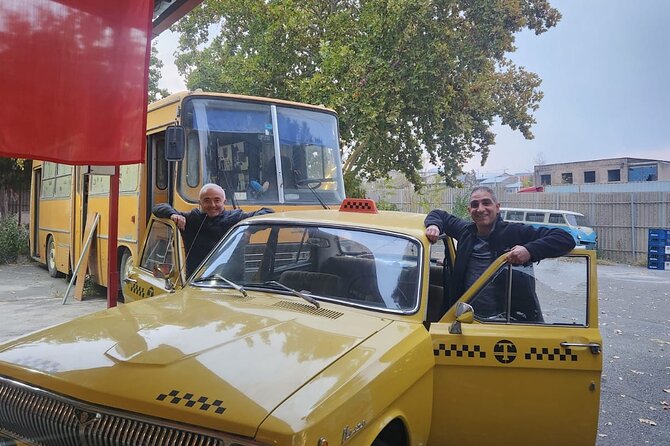
Let’s talk value in plain terms. At $65 per person for roughly 4 hours, you’re paying for three things: a guide who connects the dots, transportation help (metro plus a Soviet-style van ride), and included food and one admission.
Your inclusions include:
- a local expert guide
- snacks like Perashki and Ponchik, plus market sweet tastings
- metro ride and Soviet style van
- admission included for the Children’s Railway
Many other stops in the route are free admission, which matters because it keeps the tour feeling like a guided walk and ride, not a string of paid attractions. The one included paid admission at the end is the big “payoff” stop, the one with the 1937 details you can actually see.
The small-group cap of 6 travelers also supports value. It makes questions easier and helps you keep pace without losing the thread of the story.
Language is English, and you get a mobile ticket. If you book close to the travel date, confirmation can come within 48 hours, depending on availability, so you’ll want to check your email and make sure your time still works.
Operating hours are listed for Mondays, with a window of 10:00 AM to 2:00 PM. If your schedule is tight, you may need to plan around that day and window to avoid missing it.
The guide experience: Marine’s storytelling style and the jokes that land
This is the kind of tour where the guide makes more difference than you might expect. The route can be “just places” on paper. In practice, you want someone who can connect meaning in real time.
Marine is one of the guides associated with this experience, and the style that shows up in feedback is a mix of confidence and personal context. She ties current sights back to Soviet-era realities and adds Soviet jokes in a way that keeps the mood light without turning serious facts into a comedy routine.
That matters for you because humor is a memory tool. When the guide says something slightly unexpected, like a joke that points to a Soviet habit or a public ritual, your brain files the story with emotion, not just dates.
You’ll also notice the pacing is methodical. That’s another way to think about value. A well-planned route gives you time at each stop, including photo chances, without feeling like the tour is trying to cram extra sights into every minute.
Practical advice for your Soviet Yerevan afternoon
Here are a few things I’d do to get the most out of a 4-hour run like this.
First, wear comfy shoes. You’re combining metro and station areas with market time and street walks. Keep your body ready for motion.
Second, plan your expectations. This isn’t a “museum all the time” tour. It’s a guided city look at Soviet-era traces in Yerevan’s real layout.
Third, bring your photo patience. Republic Square and station areas are easy to photograph, but the interesting shots come when you slow down and look at details, like how the station and railway connection feels, or how apartment blocks repeat patterns along the street.
Fourth, be ready to taste. The snack component is not an afterthought. Perashki and Ponchik help you anchor the whole story in something you can actually experience.
Finally, keep one mental question as you go: what looks unchanged, and what changed when the political story changed? That one question turns a fun walk into a deeper understanding without making it heavy.
Should you book Soviet Yerevan if you like history?
I’d book this if you want Soviet Yerevan with a guided thread. You get the big symbolic place first, then you follow the Soviet influence into transit, food markets, apartment streets, and finally a 1937 railway site that still feels alive.
It’s also a great fit if you like variety in a single afternoon. You are not stuck doing one type of attraction. It’s monuments, transit architecture, market life, apartment planning, and a children’s rail relic, all within about 4 hours.
Skip it if you want only famous sights with no attention to how everyday life worked in the USSR. This tour leans into the social mechanics behind the look of the city.
If your timing fits, especially a Monday during the listed hours, this is an easy decision for a focused, small-group view of a side of Yerevan most people do not see.
FAQ
How long is the Soviet Yerevan small-group experience?
It runs for about 4 hours.
How much does it cost, and what do I get for that price?
The price is $65 per person. It includes a local expert guide, snacks (Perashki and Ponchik plus sweet at the market), a metro ride, a Soviet style van ride, and admission to the Children’s Railway.
What group size is this tour limited to?
The tour has a maximum of 6 travelers.
Is the tour offered in English?
Yes, it is offered in English.
Do I need to buy tickets for the attractions on the route?
Admission is free for Republic Square, Sasuntsi Davit Street, Malatia-Sebastia, and Beknazarian Street. Admission to the Children’s Railway is included.
Can I cancel for a full refund?
Yes. You can cancel up to 24 hours in advance for a full refund. If you cancel less than 24 hours before the start time, the amount paid is not refunded.
Wider Loops Around Yerevan
- Yerevan city tour with drinks in a classic car with photography
★ 5.0 · 41 reviews - Private Yerevan City Tour: Erebuni, Matenadaran & Tsitsernakaberd Museums
★ 5.0 · 34 reviews - Walking Yerevan City Tour with 5 Wine & 10 years-old brandy
★ 5.0 · 17 reviews - Private tour to Tsaghkadzor city (Ropeway), Lake Sevan, Sevanvank, Dilijan
★ 5.0 · 16 reviews
Everything Else We Have Written Up in Armenia
- Group Tour: Garni, Symphony of Stones, Geghard, Lavash Baking
★ 5.0 · 1,042 reviews - Group Tour: Lake Sevan (Sevanavank), Dilijan (Goshavank, Haghartsin)
★ 5.0 · 1,036 reviews - Group tour: Khor Virap, Noravank, Areni Winery and Cave
★ 5.0 · 651 reviews - Yerevan: Garni, Geghard, Symphony of Stones & Lavash Baking
★ 5.0 · 589 reviews
Yerevan, Square to Cascade
- Cultural Walking Tour in Yerevan with Armenian food Tastings
★ 5.0 · 334 reviews - Yerevan Card Including Free 30+ Museums, 5+ Tours & Discounts
★ 5.0 · 91 reviews - Private sightseeing and walking tour in Yerevan
★ 5.0 · 78 reviews - Group Tour: Sightseeing in Yerevan, Erebuni Museum and Fortress
★ 5.0 · 42 reviews
Just Reviewed: More From Around Armenia
- Limitless Off-Road Private Tours in Armenia★ 5.0 · 3 reviews
- Garni, Geghard, Lake Sevan, Sevanavank Monastery – private tour from Yerevan★ 5.0 · 3 reviews
- Tsitsernakaber-Hripsime-Echmiatsin-Noy brandy factory★ 4.5 · 3 reviews
- Day Trip to Tatev Monastery★ 4.5 · 3 reviews
Yerevan City Tours, compared.
 ★ 4.7Armenia. Akhpat, Dilijan, Sevan, cascad Yerevan from TbilisiFrom $93254 reviews
 ★ 5.0Yerevan Card Including Free 30+ Museums, 5+ Tours & DiscountsFrom $4091 reviews
 ★ 5.0Museum of Illusions TourFrom $1284 reviews
 ★ 5.0Private sightseeing and walking tour in YerevanFrom $4678 reviews
 ★ 5.0Sightseeing in Yerevan, Erebuni Museum and FortressFrom $2442 reviews
 ★ 5.0Yerevan city tour with drinks in a classic car with photographyFrom $4341 reviews
 ★ 5.0Private Yerevan City Tour: Erebuni, Matenadaran & Tsitsernakaberd MuseumsFrom $6334 reviews
 ★ 5.0Yerevan Private Walking Food TourFrom $22031 reviews
Browse the lists this tour appears in